

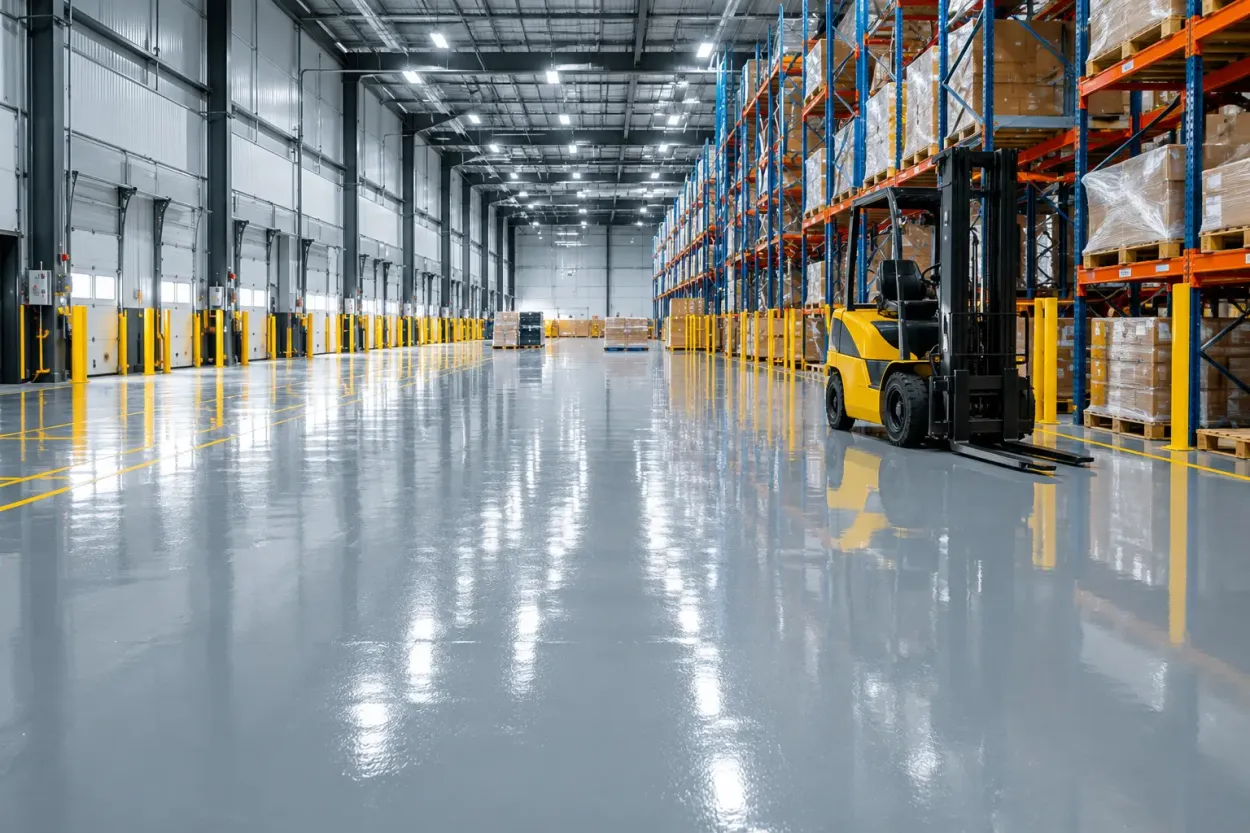
Downtime, Safety Risks, and Repair Costs: The Real Cost of Floor Failure
If you manage a warehouse, manufacturing facility, distribution center, or industrial plant, you already know that flooring isn’t just a surface—it’s a critical business asset.
Every day, industrial floors endure relentless punishment from forklifts, pallet jacks, heavy machinery, chemical spills, foot traffic, and constant cleaning. When flooring begins to fail, the consequences can be significant:
- Increased slip-and-fall risks
- Production interruptions
- Costly repairs and replacements
- Damaged equipment
- Compliance concerns
- Negative impressions for employees and visitors
One of the most common questions facility managers ask is:
“How long does epoxy flooring last in a high-traffic industrial environment?”
The short answer is that a professionally installed industrial epoxy floor typically lasts 5–10 years in demanding environments, while well-maintained systems can remain functional for 15–20 years or longer before requiring major restoration or replacement.
However, the actual lifespan depends on several critical factors—including installation quality, traffic volume, environmental conditions, and perhaps most importantly, ongoing maintenance.
At MCA Group, we’ve spent years helping Canadian businesses maintain commercial and industrial facilities. Through our experience cleaning and maintaining industrial floors, we’ve seen firsthand how proactive maintenance can dramatically extend epoxy flooring lifespan while reducing operational costs.
Let’s explore what determines epoxy floor longevity—and what you can do to maximize your investment.
Understanding Epoxy Flooring Lifespan in Industrial Environments
Not all epoxy floors perform the same way.
A warehouse operating 24/7 with forklift traffic faces very different demands than a light manufacturing facility or storage center. The durability of an epoxy floor depends on how well the flooring system matches the environment.
Typical Lifespan by Epoxy Flooring System
| Flooring System | Typical Lifespan | Best Applications |
|---|---|---|
| Water-Based Epoxy | 3–5 Years | Light industrial spaces |
| Solvent-Based Epoxy | 5–8 Years | Moderate traffic facilities |
| 100% Solids Epoxy | 10–20+ Years | Warehouses, manufacturing plants |
| Epoxy-Urethane Hybrid Systems | 15–25 Years | Heavy-duty industrial operations |
| Chemical-Resistant Industrial Systems | 10–20+ Years | Food processing, chemical facilities |
While installation quality matters, daily operational conditions often determine whether a floor reaches the upper or lower end of these ranges.
Key Factors That Impact Industrial Floor Durability
1. Surface Preparation and Installation Quality
The lifespan of any epoxy flooring system begins long before the coating is applied.
Proper concrete preparation—including grinding, shot blasting, crack repair, moisture testing, and contaminant removal—is essential for long-term adhesion.
We’ve seen facilities where coatings began peeling within a few years due to inadequate surface preparation. Conversely, properly installed systems often perform exceptionally well for decades.
Signs of installation-related failure include:
- Delamination
- Early peeling
- Bubbling
- Poor adhesion
- Uneven wear patterns
This is why working with experienced flooring contractors is critical from day one.
2. Traffic Volume and Load Intensity
Traffic patterns have a direct impact on epoxy flooring lifespan.
Consider these examples:
Low Traffic Environment
- Occasional equipment movement
- Light foot traffic
- Minimal abrasion
Expected lifespan: 15–20 years
High Traffic Warehouse
- Continuous forklift operations
- Heavy pallet movement
- Frequent turning and braking
Expected lifespan: 7–12 years without proactive maintenance
Areas near loading docks, receiving zones, and forklift intersections typically experience accelerated wear.
Regular inspections help identify these high-risk zones before major failures occur.
3. Chemical Exposure
Industrial facilities often expose flooring systems to:
- Oils
- Solvents
- Acids
- Cleaning agents
- Coolants
- Industrial chemicals
Even chemical-resistant epoxy systems can deteriorate when spills remain untreated.
Professional cleaning programs play a critical role in removing contaminants before they compromise coating integrity.
4. Cleaning and Maintenance Practices
This is where many facilities unintentionally shorten floor lifespan.
Dust, grit, metal shavings, and debris act like sandpaper beneath forklift wheels.
Without routine removal, these abrasive materials gradually wear down the protective coating layer.
A comprehensive high-traffic epoxy maintenance program typically includes:
- Daily debris removal
- Scheduled scrubbing
- Spill response procedures
- Inspection reporting
- Preventive maintenance planning
Facilities that implement structured maintenance programs often achieve significantly longer service life from their flooring systems.
Latest Industrial Epoxy Flooring Trends (2025–2026)
The industrial flooring industry continues to evolve rapidly.
Several innovations are helping facilities achieve greater durability and sustainability.
High-Solids Epoxy Systems
High-solids formulations are becoming increasingly popular because they:
- Produce thicker coatings
- Offer superior abrasion resistance
- Reduce VOC emissions
- Deliver longer service life
These systems are particularly valuable in distribution centers and manufacturing environments.
Epoxy-Urethane Hybrid Systems
Hybrid flooring systems combine the strength of epoxy with the flexibility of urethane.
Benefits include:
- Enhanced impact resistance
- Better thermal shock performance
- Increased chemical resistance
- Reduced cracking risk
Many large industrial facilities now view hybrid systems as the premium solution for demanding environments.
Sustainability and Environmental Performance
Environmental initiatives continue influencing facility management decisions.
New flooring technologies focus on:
- Lower emissions
- Longer replacement cycles
- Reduced waste generation
- Improved energy efficiency through reflective finishes
These trends align with broader sustainability goals across Canadian industrial sectors.

Common Epoxy Flooring Failures—and How Professional Maintenance Prevents Them
Many flooring failures are preventable.
Let’s examine the most common issues we encounter.
Peeling and Delamination
Causes:
- Moisture intrusion
- Surface contamination
- Poor installation
- Chemical damage
Prevention:
- Routine inspections
- Moisture monitoring
- Rapid spill cleanup
- Professional cleaning protocols
Surface Wear and Abrasion
Causes:
- Forklift traffic
- Embedded debris
- Inadequate cleaning
Prevention:
- Daily dust and debris removal
- Scheduled mechanical scrubbing
- Protective maintenance programs
Staining and Chemical Damage
Causes:
- Delayed spill response
- Aggressive chemicals
- Inappropriate cleaning products
Prevention:
- Immediate cleanup procedures
- Proper chemical handling
- Industry-specific cleaning programs
Cracking and Impact Damage
Causes:
- Heavy loads
- Thermal expansion
- Structural movement
Prevention:
- Regular inspections
- Early crack identification
- Prompt repair recommendations
At MCA Group, our facility maintenance teams frequently identify early warning signs before they become major flooring failures. This proactive approach helps clients avoid costly repairs and unexpected downtime.
Epoxy Flooring vs. Other Industrial Flooring Options
When evaluating industrial floor durability, epoxy consistently offers one of the strongest returns on investment.
| Flooring Type | Durability | Maintenance Requirements | Long-Term Cost |
|---|---|---|---|
| Bare Concrete | Moderate | High | Higher |
| Vinyl Tile | Low | High | Higher |
| Polished Concrete | Good | Moderate | Moderate |
| Industrial Epoxy | Excellent | Moderate | Lower |
| Epoxy-Urethane Hybrid | Exceptional | Moderate | Lowest Over Lifecycle |
Although epoxy flooring may require higher initial investment than some alternatives, its durability and lower lifecycle costs often make it the more economical choice.
The ROI of Proper Epoxy Floor Maintenance
Many facility managers focus on installation costs while overlooking maintenance economics.
Consider the potential savings:
Reduced Replacement Costs
Extending floor life from 8 years to 15 years can significantly reduce capital expenditures.
Fewer Operational Interruptions
Emergency floor repairs often result in:
- Production delays
- Safety concerns
- Equipment access restrictions
Preventive maintenance minimizes these disruptions.
Improved Workplace Safety
Well-maintained floors provide:
- Better traction
- Reduced trip hazards
- Improved visibility
- Cleaner work environments
Better Asset Protection
Industrial floors protect:
- Forklifts
- Machinery
- Inventory
- Employees
Protecting the floor helps protect everything operating on it.
High Traffic Epoxy Maintenance: Practical Tips from MCA Group
If your facility relies on epoxy flooring, these best practices can help maximize lifespan:
Daily
- Remove dust and abrasive debris
- Address spills immediately
- Inspect high-traffic zones
Weekly
- Conduct mechanical scrubbing
- Evaluate loading dock areas
- Check forklift turning points
Monthly
- Inspect for scratches, wear, and coating loss
- Review cleaning effectiveness
- Document changes
Annually
- Schedule professional floor assessments
- Evaluate coating thickness
- Identify areas requiring touch-up or recoating
The earlier issues are detected, the more affordable repairs typically become.
When Should You Recoat Industrial Epoxy Flooring?
A complete replacement is not always necessary.
In many cases, facilities can restore protection through strategic recoating before the underlying system fails.
Warning signs include:
- Visible wear patterns
- Loss of gloss
- Surface scratching
- Increased staining
- Reduced chemical resistance
Recoating at the right time can add years to your flooring system while avoiding the expense of full replacement.
Partner with MCA Group to Protect Your Industrial Flooring Investment
Industrial epoxy flooring is designed to withstand demanding conditions—but even the most durable system requires proper care.
For most high-traffic facilities, epoxy flooring lifespan ranges from 5–10 years, while expertly maintained systems can exceed 20 years of service. The difference often comes down to proactive cleaning, inspections, and maintenance.
At MCA Group, our commercial cleaning and facility maintenance professionals help businesses across Canada protect critical assets, improve workplace safety, and extend the life of industrial flooring systems.
Whether you need:
- Routine industrial cleaning
- High-traffic floor maintenance programs
- Facility inspections
- Floor condition assessments
- Recoating preparation services
- Recommendations for trusted flooring specialists
Our team is ready to help.
Ready to Extend the Life of Your Industrial Floors?
Contact MCA Group today to schedule a facility assessment and learn how a customized cleaning and maintenance program can help maximize your epoxy flooring investment while reducing costs, risks, and downtime.
Related Services:
- Industrial Cleaning Services
- Warehouse Cleaning Services
- Facility Maintenance Programs
- Commercial Floor Care Solutions


