
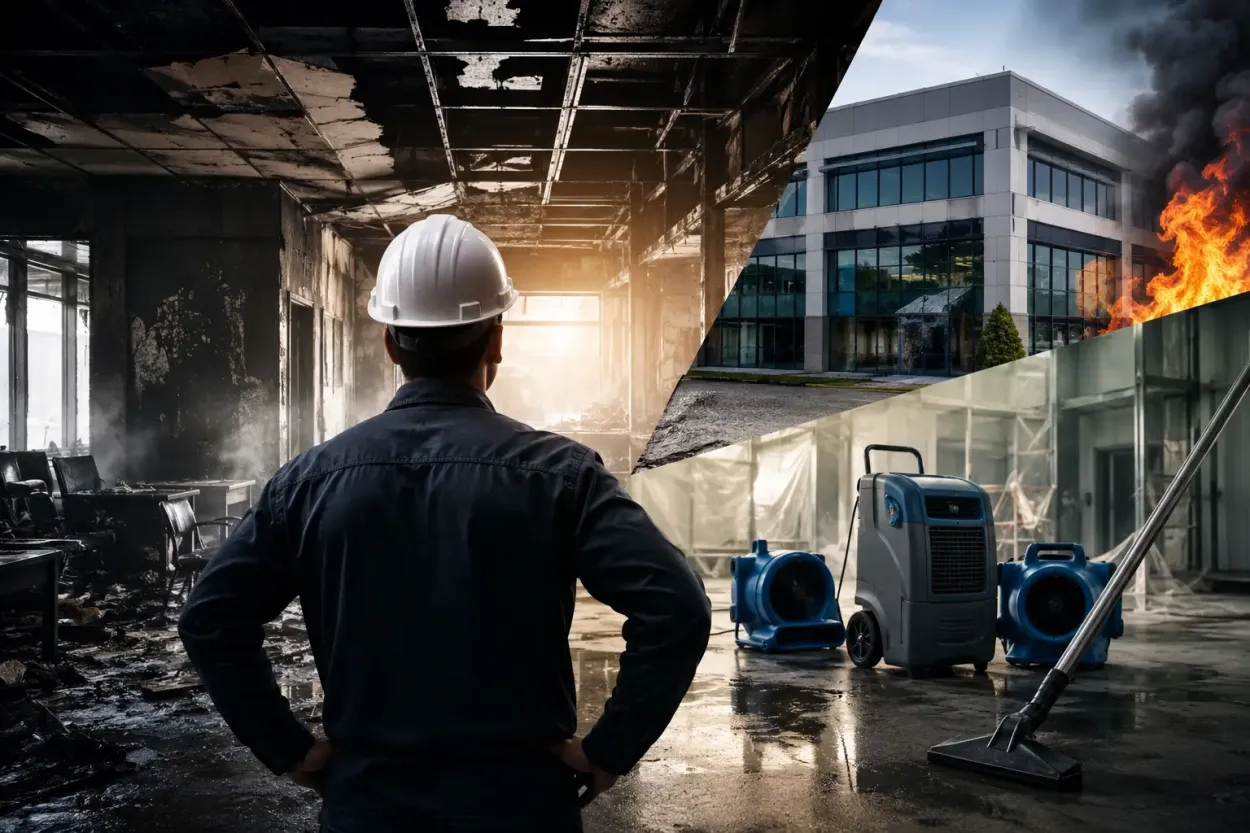
A Fire Is Out. Now What?
It’s 3:00 a.m.
You receive a call that no business owner or property manager ever wants to get.
A fire has broken out at your office, retail store, warehouse, or commercial facility.
The firefighters have done their job. The flames are gone. But when you arrive on site, the reality sets in. Burned materials. Smoke odor. Water on the floor from firefighting efforts. Fire Damage Cleanup inventory. Employees wondering when they can return to work.
At this stage, many business owners assume the worst is over.
In reality, the next 48 hours are often the most critical part of the recovery process.
What happens during those first two days can significantly affect restoration costs, insurance outcomes, employee safety, and how quickly your business gets back to normal.
At MCA Group, we have spent years helping businesses across Toronto and the GTA recover from fire, smoke, and water damage. Our commercial restoration teams understand the urgency of protecting your property, minimizing downtime, and helping you move forward with confidence.
This guide explains exactly what happens during the first 48 hours after a commercial fire damage—and what steps business owners should take immediately.
Why the First 48 Hours Matter
Many people think fire damage ends when the flames are extinguished.
Unfortunately, that’s only the beginning.
Think of Fire Damage Like a Domino Effect
A fire triggers multiple forms of damage at once:
- Fire damages structures and contents
- Smoke spreads throughout the building
- Soot settles on surfaces
- Water from firefighting efforts saturates materials
- Moisture creates conditions for mold growth
- Smoke odors continue penetrating porous materials
The longer these issues remain untreated, the more difficult and expensive restoration becomes.
Soot Starts Damaging Surfaces Quickly
Soot contains acidic particles that can begin corroding metals, electronics, and finished surfaces shortly after a fire.
Imagine leaving saltwater on a vehicle. The longer it sits, the more damage occurs.
Soot behaves in a similar way.
Water Damage Doesn’t Wait
Even a relatively small commercial fire can require thousands of litres of water to extinguish.
That water can:
- Soak drywall
- Damage flooring
- Affect electrical systems
- Warp wood materials
- Create mold risks
Industry restoration standards emphasize rapid drying and moisture control because mold can begin developing within days under the right conditions.
Smoke Odors Become Harder to Remove
Smoke particles are extremely small.
They travel into:
- HVAC systems
- Ceiling tiles
- Upholstery
- Carpets
- Wall cavities
Fast intervention often prevents permanent odor issues.
Faster Response Often Means Lower Costs
Organizations such as FEMA and restoration industry experts consistently emphasize the value of rapid mitigation after disasters because early action reduces secondary damage and shortens recovery timelines.
The sooner restoration begins, the greater the chance of salvaging materials, equipment, and inventory.
Image Suggestion: Infographic showing “Fire → Smoke → Soot → Water → Mold” timeline.
Step-by-Step: What Business Owners Should Do During the First 48 Hours
Step 1: Prioritize Safety First
Before entering the building:
- Wait for fire officials to declare the site safe
- Follow all emergency instructions
- Avoid damaged structural areas
- Stay away from exposed electrical hazards
Never assume a building is safe simply because the fire is out.
Common Mistake
Entering too soon to retrieve documents, inventory, or electronics.
This can expose occupants to structural hazards and airborne contaminants.
Step 2: Secure the Property
After a fire, buildings are often vulnerable to:
- Weather exposure
- Theft
- Vandalism
- Unauthorized entry
Temporary protection may include:
- Emergency board-up services
- Roof tarping
- Temporary fencing
- Security measures
Securing the property immediately helps prevent additional losses that may complicate insurance claims.
Step 3: Document Everything
Before cleanup begins:
Take photographs and videos of:
- Structural damage
- Equipment damage
- Inventory losses
- Smoke staining
- Water damage
Create detailed notes including:
- Dates
- Times
- Locations
- Observations
Good documentation helps support your insurance claim and creates a clear record of damages.
Pro Tip
Don’t throw away damaged items until your insurer or restoration team advises you to do so.
Step 4: Contact Your Insurance Provider
Report the incident as soon as possible.
Provide:
- Claim information
- Photos
- Videos
- Initial loss details
Many insurers also appreciate early involvement from professional fire restoration contractors because it helps establish damage scope and mitigation plans.
Step 5: Call a Professional Fire Restoration Company
This is where speed matters.
Professional restoration teams can begin:
- Damage assessments
- Moisture mapping
- Soot analysis
- Emergency stabilization
- Water extraction
Modern fire restoration follows structured industry standards, including guidance from the ANSI/IICRC S700 Standard for Professional Fire and Smoke Damage Restoration, which provides procedures for assessing fire residues, smoke contamination, odors, and restoration requirements.

What Can You Do Yourself?
Safe Tasks
- Communicate with employees and stakeholders
- Gather documentation
- Coordinate insurance communications
- Secure important records if approved by authorities
Leave These Tasks to Professionals
- Soot removal
- Smoke damage cleaning
- Odor treatment
- Water extraction
- HVAC cleaning
- Structural drying
- Contents restoration
Improper cleaning methods can permanently damage surfaces and spread contamination.
What Professional Restoration Teams Do During the First 48 Hours
1. Emergency Board-Up and Stabilization
The first priority is preventing further damage.
Teams may:
- Board windows
- Secure doors
- Install temporary roof coverings
- Protect exposed areas
This creates a stable environment for restoration work.
2. Water Extraction and Structural Drying
Many commercial fires create substantial water damage.
Restoration teams use:
- Commercial extractors
- Air movers
- Industrial dehumidifiers
- Moisture monitoring tools
Rapid drying reduces the risk of mold and structural deterioration.
3. Soot and Smoke Damage Cleaning
Not all soot behaves the same way.
Different fire types create different residues.
Professionals identify contamination levels and use specialized cleaning techniques to safely remove smoke residues from:
- Walls
- Ceilings
- Fixtures
- Equipment
- Contents
4. Air Quality Improvement
Smoke particles can remain airborne long after a fire.
Professional restoration teams commonly use:
- HEPA air scrubbers
- HEPA filtration systems
- Negative air machines
- Odor neutralization technologies
These tools help improve indoor air quality and reduce lingering contamination.
5. Contents Recovery and Inventory Protection
Commercial properties often contain valuable assets such as:
- Inventory
- Electronics
- Documents
- Machinery
- Office equipment
Restoration professionals assess what can be cleaned, restored, and salvaged.
Fast action often saves assets that might otherwise be considered total losses.
Why Businesses Across Toronto Trust MCA Group
MCA Group has built its reputation serving commercial properties throughout Toronto, the GTA, and across Canada with cleaning, specialty restoration, and facility support services. With decades of commercial service experience, the team understands the unique challenges faced by office buildings, retail locations, industrial facilities, warehouses, and multi-site businesses.
When businesses experience fire damage, MCA Group focuses on:
- Rapid emergency response
- Commercial property expertise
- Minimal operational disruption
- Industry-standard restoration practices
- Clear communication throughout the process
Image Suggestion: Before-and-after commercial fire restoration project.
Common Concerns Business Owners Have After a Fire
“Is It Safe for Employees to Return?”
Not always.
Smoke residue, airborne particles, and hidden moisture issues can create health concerns.
Professional assessments help determine when occupancy is appropriate.
“Will Insurance Cover Everything?”
Coverage varies by policy.
However, prompt reporting, proper documentation, and professional mitigation often support smoother claim processing.
Keeping detailed records is one of the most important things you can do.
“How Long Will My Business Be Closed?”
Every situation is different.
Factors include:
- Fire severity
- Water damage extent
- Building size
- Contents affected
- Insurance approvals
The earlier mitigation begins, the greater the opportunity to reduce downtime.
Prevention Tips for the Future
While not every fire can be prevented, businesses can improve preparedness by:
- Updating fire response plans annually
- Conducting employee safety training
- Backing up digital records
- Maintaining fire suppression systems
- Scheduling electrical inspections
- Creating emergency vendor contact lists
Having a restoration partner identified before an emergency occurs can save valuable time when every hour matters.
Final Thoughts: The First 48 Hours Can Shape the Entire Recovery
A commercial fire is overwhelming.
But recovery doesn’t have to be.
The actions taken during the first 48 hours often determine whether a business experiences a manageable interruption or a prolonged, costly recovery.
Fast response helps reduce:
- Smoke damage
- Soot corrosion
- Water damage
- Mold growth
- Business downtime
Most importantly, it helps protect your people, your property, and your future operations.
If your business has experienced a fire—or you’d like to prepare an emergency response plan before one happens—the team at MCA Group is ready to help.
Request a Free Fire Damage Assessment
Learn more about MCA Group’s Fire Restoration Services:
https://mcagroup.ca/fire-restoration/
Phone: (416) 884-1652
Email: info@mcagroup.ca
Available: 24/7 Emergency Response
CTA Banner Suggestion: “Need Immediate Fire Damage Cleanup in Toronto? Contact MCA Group for a Free Assessment.”
References
- FEMA Disaster Recovery Resources – https://www.fema.gov
- IICRC S700 Standard for Professional Fire and Smoke Damage Restoration – https://iicrc.org/s700/
- MCA Group Fire Restoration Services – https://mcagroup.ca/fire-restoration/
- IICRC Standards Information – https://iicrc.org
- Restoration Industry Guidance on Fire and Smoke Recovery – https://www.scrt.org
- Fire and Smoke Restoration Standard Overview – https://www.randrmagonline.com/articles/91119-new-standard-published-ansi-iicrc-s700-standard-for-fire-and-smoke-damage-restoration


