

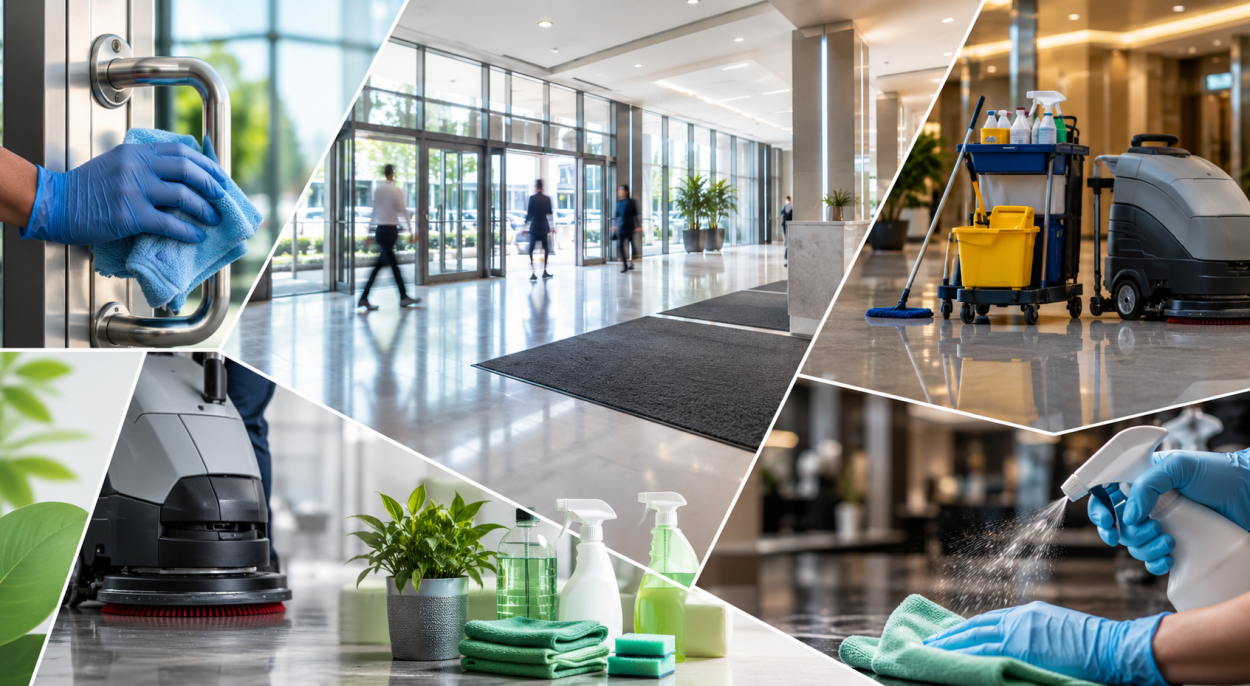
High-traffic commercial spaces, like bustling retail stores, corporate office lobbies, gyms, restaurants, and shopping centers, endure constant foot traffic, spills, and surface contact that accelerate dirt buildup, germ spread, and wear and tear. Essential Cleaning Tips for these environments go beyond aesthetics; they directly impact occupant health, regulatory compliance, customer perception, and operational efficiency. Businesses searching for commercial cleaning companies often seek practical, expert-backed strategies to reduce absenteeism, prevent slip hazards, extend asset life, and create inviting spaces that drive revenue.
This in-depth guide draws from current CDC and EPA recommendations, industry best practices updated through 2025–2026, and proven operational insights to deliver actionable, depth-oriented advice tailored to real-world challenges.
Key highlights of Essential Cleaning Tips
- Traffic-Based Tiered Cleaning Schedule A practical, customized system with daily (multiple times in peak hours), weekly, and monthly deep-clean tasks focused on high-traffic zones like entryways, lobbies, and restrooms to handle heavy use effectively.
- Prioritizing High-Touch Surfaces Detailed protocols for disinfecting germ hotspots (door handles, elevator buttons, handrails, shopping carts, POS systems) multiple times daily using CDC/EPA-aligned methods and proper contact times.
- Advanced Floor Care Strategies Emphasis on prevention with entrance matting, daily vacuuming/mopping, professional equipment (auto-scrubbers), and periodic deep extraction to maintain safety, appearance, and longevity of floors.
- Tools, Technology & Sustainable Practices Recommendations for modern equipment (microfiber, electrostatic sprayers, HEPA vacuums), eco-friendly EPA List N products, and smart monitoring to improve efficiency and meet 2026 sustainability expectations.
- Partnering with Professional Commercial Cleaning Companies Guidance on when and why to hire experts for consistent results, compliance, and cost-efficiency, with a single mention of MCA Group as a trusted provider for tailored commercial cleaning solutions.
Understanding the Unique Challenges of High-Traffic Environments
In high-traffic zones, floors and entryways can accumulate visible soil within hours, while high-touch surfaces such as door handles, elevator buttons, and counters can become germ reservoirs. Following Essential Cleaning Tips for High-Traffic Commercial Spaces helps businesses maintain cleaner, safer, and more professional environments. CDC guidelines emphasize that high-traffic areas warrant more frequent cleaning and, when needed, disinfection in addition to routine maintenance to help minimize infection risks.
Key risks include:
- Pathogen transmission: High-touch points spread viruses and bacteria rapidly.
- Floor degradation: Tracked-in dirt and moisture accelerate wear on carpets and hard surfaces.
- Air quality decline: Dust, allergens, and VOCs from cleaning products affect indoor environments.
- Compliance and liability: Failure to meet OSHA, local health codes, or CDC-aligned standards can result in fines or reputational damage.
Professional commercial cleaning companies address these through specialized training, equipment, and data-driven scheduling, delivering consistency that in-house teams often struggle to maintain amid staffing turnover.
1. Implement a Traffic-Based Tiered Cleaning Schedule
A one-size-fits-all approach fails in dynamic commercial settings. Develop a customized plan based on foot traffic analytics (e.g., peak hours, seasonal events).
Daily Priorities (Multiple Times in Peak Periods):
- Vacuum and mop entryways, lobbies, hallways, and main aisles to remove tracked-in debris immediately.
- Sanitize all high-touch surfaces: door handles, push plates, elevator buttons, handrails, light switches, POS systems, shopping carts, and restroom fixtures.
- Empty and disinfect trash receptacles; spot-clean spills to prevent slips.
- Detail restrooms: toilets, sinks, faucets, dispensers, and stall locks.
Weekly Deep Tasks:
- Deep-vacuum or extract carpets in high-traffic zones.
- Dust vents, light fixtures, baseboards, and high ledges (work top-down to avoid re-soiling).
- Polish furniture, clean interior glass, and sanitize break rooms thoroughly.
Monthly/Quarterly Deep Cleans:
- Professional carpet shampooing or floor restoration.
- HVAC vent cleaning for improved air quality.
- Grout/tile restoration and upholstery treatment.
Use digital logs or apps to track completion—essential for audits and demonstrating due diligence to stakeholders.

2. Master High-Touch Surface and Disinfection Protocols
CDC guidance stresses cleaning visibly dirty surfaces first with detergent, then using EPA List N disinfectants as needed, allowing proper contact time.
Best Practices:
- Disinfect high-touch areas at least 2–4 times daily in very busy spaces.
- Employ microfiber cloths and color-coded tools (e.g., red for restrooms) to prevent cross-contamination.
- Select hospital-grade, low-VOC, Green Seal-certified products for safety and sustainability, aligning with 2026 industry trends toward eco-friendly solutions.
- Train staff on proper PPE and techniques, such as working from clean to dirty areas.
In retail or food-service environments, focus extra attention on checkout zones and shared equipment.
3. Advanced Floor Care Strategies for Durability and Safety
Floors bear the brunt of traffic. Effective management combines prevention and maintenance:
- Install high-quality entrance matting systems to trap 70–80% of incoming soil.
- Use HEPA-filter vacuums and auto-scrubbers for large areas; avoid damaging methods on sensitive surfaces.
- Schedule periodic deep extraction cleaning for carpets and buffing/polishing for hard floors.
- Monitor for early wear signs and apply protective coatings as needed.
Proper floor care not only looks professional but reduces long-term replacement costs significantly.
4. Tools, Technology, and Sustainable Practices
Leverage modern solutions:
- Backpack vacuums and ride-on scrubbers for efficiency in large footprints.
- Electrostatic sprayers for rapid, even disinfectant coverage.
- Smart monitoring systems that track cleaning frequency and air quality.
Prioritize sustainable products to meet growing customer and employee demand for green operations, reducing environmental impact without sacrificing efficacy.
5. When and How to Partner with Professional Commercial Cleaning Companies
Many businesses searching for commercial cleaning companies want reliable partners who handle complexity while allowing focus on core operations. Professionals bring expertise in risk assessment, compliance, scalable staffing, and specialized equipment, often yielding better results at lower total cost through efficiency and preventive maintenance.
Benefits include reduced sick days, enhanced first impressions, consistent quality, and access to the latest protocols and eco-friendly solutions.
For tailored, high-quality commercial cleaning across diverse facilities, MCA Group stands out as a trusted provider with decades of experience delivering reliable results.
Measuring Success and Continuous Improvement
To make Essential Cleaning Tips for High-Traffic Commercial Spaces more effective, businesses should track key metrics such as customer and employee feedback scores, incident reports related to slips or illness, and surface ATP testing for cleanliness validation. Cleaning schedules should be reviewed and adjusted quarterly based on performance data, seasonal changes, traffic patterns, and evolving facility needs.
Conclusion: Elevate Your Space with Proactive Cleaning
Effective cleaning in high-traffic commercial spaces is a strategic investment that protects health, boosts productivity, and strengthens your brand. By following these detailed, evidence-based cleaning tips, anchored in CDC/EPA standards and 2026 industry insights, you can maintain exceptional standards even under heavy use.
If managing this in-house feels overwhelming, consulting an experienced commercial cleaning company can provide peace of mind and superior outcomes. By following Essential Cleaning Tips for High-Traffic Commercial Spaces, businesses can better understand where their current cleaning protocols may need improvement. Start by auditing your existing procedures against the checklists above, then reach out to specialists for a customized assessment that supports cleaner, safer, and more efficient commercial environments.
References and Sources:
- CDC: When and How to Clean and Disinfect a Facility (2024, still current).
- Various 2025–2026 industry publications on commercial janitorial best practices.
- EPA guidance on approved disinfectants.


