Disinfection vs Sanitization: What’s Right for Your Workplace?
Maintaining a healthy workplace is no longer optional — it is a core part of business continuity, employee morale, and customer trust. Yet, one of the most common questions businesses ask is:
What is the difference between Disinfection vs Sanitization — and which one do we actually need?
Both methods reduce germs, but they serve different purposes, use different chemicals, and are appropriate in different environments. Choosing the right approach helps you control costs while maintaining the right level of protection.
This guide explains the difference, when to use each, and how to build a cleaning strategy that actually works.
What Is Sanitization?
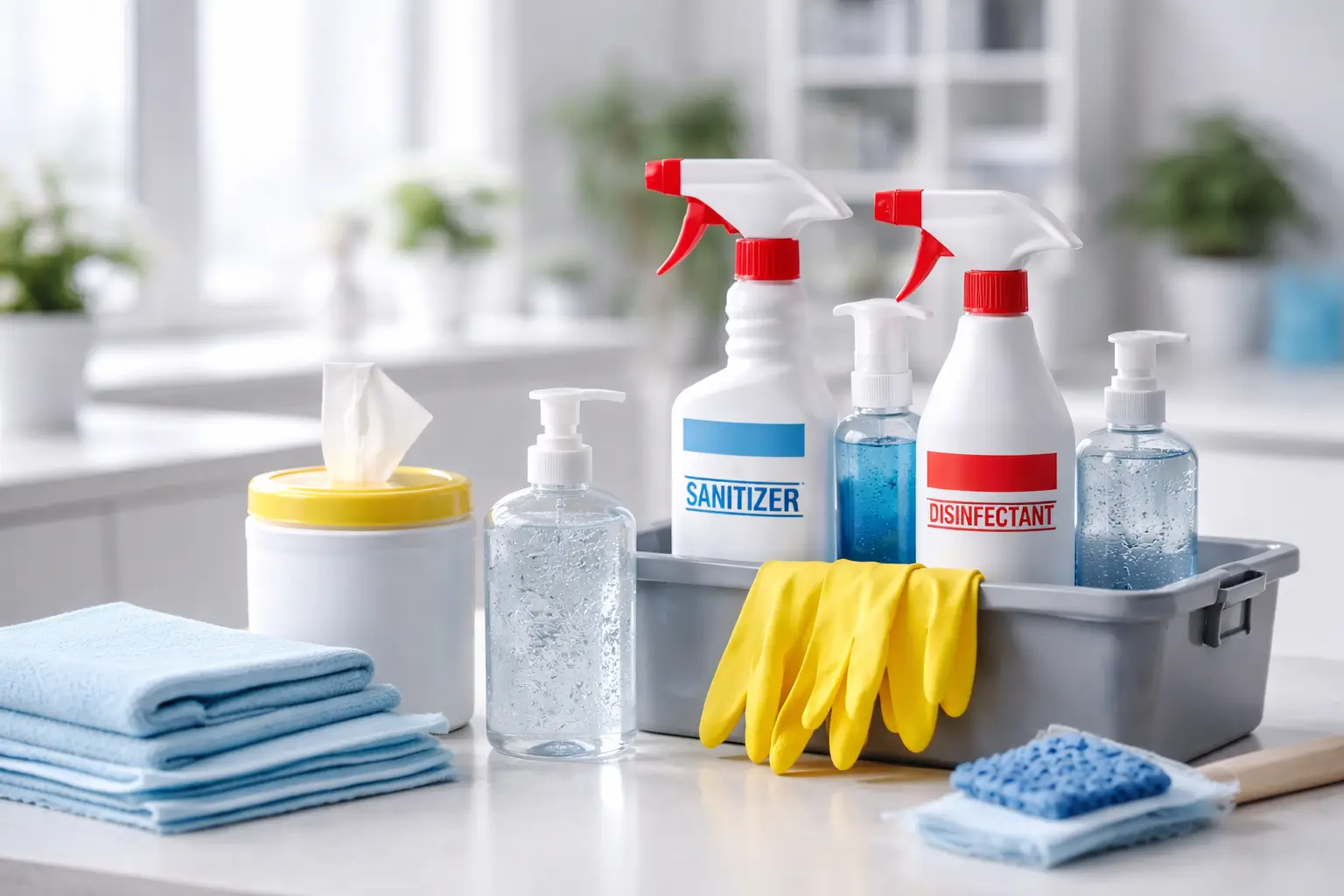
Sanitization reduces the number of germs on surfaces to a safe level, according to public health standards.
It does not remove all microorganisms — instead, it lowers germ counts enough to minimize the risk of illness in typical environments.
Where Sanitization Makes Sense
Sanitization is ideal for low-risk, high-touch areas, such as:
- Office desks and workstations
- Breakrooms and cafeterias
- Door handles and light switches
- Retail counters and customer areas
- Common spaces with regular daily use
Sanitizing is generally faster, less chemical-intensive, and suitable for daily maintenance. It helps keep environments clean and presentable while reducing routine contamination risks.
What Is Disinfection?
Disinfection kills or inactivates a wider range of viruses, bacteria, and pathogens on hard, non-porous surfaces.
Disinfectants are stronger than sanitizers and must be used according to specific dwell times (how long the chemical remains on the surface) to be effective.
Where Disinfection Is Critical
Disinfection is essential in higher-risk environments, including:
- Healthcare and medical offices
- Schools and childcare facilities
- Food preparation and processing areas
- Restrooms and locker rooms
- Workplaces with confirmed illness outbreaks
- High-density shared workspaces
Disinfection plays a major role in infection control and outbreak prevention. However, it should be targeted and performed correctly — overusing harsh chemicals can irritate skin, damage surfaces, and add unnecessary cost.
Key Differences: Disinfection vs Sanitization
| Factor | Sanitization | Disinfection |
|---|---|---|
| Purpose | Reduces germs to safe levels | Kills or neutralizes a broad range of pathogens |
| Strength | Moderate | High |
| Typical Use | Offices, general workspaces, common areas | Healthcare, food processing, restrooms, outbreak control |
| Frequency | Daily or routine use | Scheduled or as-needed based on risk |
| Chemical Exposure | Lower | Higher; requires training and dwell time |
| Regulatory Relevance | General hygiene | Often required for compliance and infection control |
Do All Workplaces Need Disinfection?
Not every surface needs daily disinfection. In fact, over-disinfecting can be unnecessary and costly.
A smart workplace program follows a layered approach:
- Routine cleaning removes visible dirt and debris.
- Sanitizing maintains safe germ levels on everyday surfaces.
- Targeted disinfection focuses on high-risk areas or outbreak events.
This approach ensures safety while protecting budgets, employees, and the environment.

Choosing the Right Method for Your Facility
The right choice depends on:
- Industry and regulatory requirements
- Number of employees and visitors
- Type of surfaces and equipment
- History of illness or contamination events
- Cleaning frequency and staffing
Examples
- Corporate offices: Daily sanitization with scheduled disinfection of high-touch areas.
- Healthcare clinics: Routine disinfection protocols following strict standards.
- Food facilities: Sanitization for food-contact surfaces and disinfection for floors, restrooms, and storage areas.
- Schools: Regular sanitizing with targeted disinfection during flu season or outbreaks.
Why Professional Cleaning Services Make a Difference
Improper use of disinfectants can:
- Leave harmful residue
- Damage surfaces
- Fail to kill pathogens if dwell time is ignored
- Risk employee safety
Professional cleaning teams are trained in:
- Chemical handling and dilution
- Correct disinfectant dwell times
- Cross-contamination prevention
- Compliance with health and safety standards
They ensure your workplace receives the right level of cleaning — not too little, not too much.
Building a Safe Workplace Cleaning Strategy
A well-designed program combines science-based cleaning with practical maintenance.
Best Practices:
- Conduct a facility risk assessment.
- Identify high-touch vs high-risk zones.
- Create a cleaning map and schedule.
- Train staff or partner with certified cleaners.
- Use eco-friendly and approved disinfectants whenever possible.
- Review and adjust during flu season or outbreaks.
Final Thought: Balance Is Key
Disinfection vs Sanitization are both valuable — but they are not interchangeable.
The right strategy depends on your workplace risk level, traffic patterns, and regulatory environment. When executed correctly, your cleaning plan supports:
- Employee health
- Customer confidence
- Operational continuity
- Compliance and safety standards
These distinctions are widely supported across research and guidance from global public health authorities.