Maintaining a clean office is essential for employee well-being, workplace efficiency, and positive first impressions. But not all cleaning services are the same. Businesses often ask: What is the difference between regular office cleaning and deep cleaning—and which one do we actually need?
This guide breaks down both types of services with clear, semantically rich explanations to help facility managers, office administrators, and business owners make informed decisions.
What Is Regular Office Cleaning?
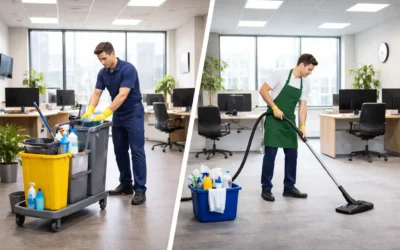
Regular office cleaning refers to routine maintenance that keeps the workspace tidy, sanitary, and presentable day to day. These tasks focus on surface-level cleanliness and are performed daily, several times per week, or weekly, depending on office traffic.
Common Tasks Included in Regular Office Cleaning
- Emptying garbage and recycling bins
- Vacuuming and mopping floors
- Wiping desks and countertops
- Cleaning reception areas and shared spaces
- Sanitizing high-touch points (door handles, light switches)
- Restocking washroom supplies
- General washroom and kitchen cleaning
Purpose of Regular Cleaning
- Maintains a professional appearance
- Reduces everyday dust, dirt, and clutter
- Supports basic hygiene expectations
- Prevents buildup that could lead to deeper issues
Regular cleaning is the foundation of a healthy workspace—but over time, certain areas require more intensive attention.
What Is Deep Office Cleaning?
Deep cleaning goes far beyond routine surface cleaning. It targets hidden, overlooked, or built-up grime and sanitizes spaces that accumulate bacteria, dust, and allergens over longer periods.
Deep cleaning is more detailed, labour-intensive, and often scheduled every 3–6 months or as needed.
Common Tasks Included in Deep Cleaning
- Cleaning behind and underneath furniture
- Detailed sanitizing of office kitchens and appliances
- Deep washroom descaling and grout cleaning
- Carpet shampooing or steam extraction
- High-dusting (vents, light fixtures, ceiling corners)
- Disinfecting fabric office chairs and partitions
- Cleaning inside drawers, cabinets, and storage areas
- Window washing (interior or both sides, depending on service)
Purpose of Deep Cleaning
- Eliminates deeply embedded dirt and bacteria
- Restores neglected areas to a hygienic state
- Reduces allergens and improves indoor air quality
- Extends the lifespan of furniture, carpets, and flooring
Deep cleaning complements regular cleaning—it does not replace it.
What are the Key Differences between deep cleaning and regular cleaning?
| Regular Office Cleaning | Deep Office Cleaning |
| Routine maintenance | Periodic, intensive sanitation |
| Surface-level cleaning | Detailed, hidden-area cleaning |
| Daily/weekly schedules | Scheduled every few months |
| Keeps office tidy | Restores office to a high-hygiene baseline |
| Quick, consistent tasks | Time-intensive, specialized tasks |
Which Type of Cleaning Does Your Business Need?
You likely need:
Below are the points required for Regular Cleaning
- Your office has daily foot traffic
- You want consistent hygiene and tidiness
- You require ongoing maintenance for staff and visitors
Deep Cleaning If…
- You haven’t cleaned beyond surface areas for months
- Carpets, washrooms, or kitchens show buildup
- Employees express concerns about dust or allergies
- You’re preparing for a renovation, inspection, or office move
In most professional environments, both services work together—regular cleaning keeps things maintained, while deep cleaning resets the office to a pristine baseline.
Why Understanding the Difference Matters
For businesses, understanding the distinction helps you:
- Budget more accurately
- Schedule services appropriately
- Improve workplace health and productivity
- Maintain compliance with hygiene standards
Final Thoughts
Regular office cleaning keeps your workspace looking professional each day, while deep cleaning ensures your environment remains healthy, sanitized, and free from long-term buildup. Together, they create a comprehensive cleaning strategy that supports employee wellbeing and preserves your office assets.