
A clean office does more than look good. It shapes how people feel when they walk in, and how well they can work once they sit down.
It supports your team. Desks, keyboards, door handles, and shared kitchens get touched all day. When they are not cleaned often, dust and germs can build up. Regular cleaning helps keep these shared spaces fresher and more pleasant to use. It also cuts down on clutter and spills that can cause trips and slips.
It sends a message to visitors. Clients and job candidates form opinions fast. A tidy lobby, clear meeting rooms, and clean restrooms suggest that you pay attention to details. A messy space can suggest the opposite, even if your work is strong.
It protects your space and equipment. Dirt and dust can wear down carpets, floors, and furniture over time. Dust can also collect in vents and around electronics. Steady upkeep is often easier and cheaper to manage than a big repair or replacement later.
It makes daily work easier. People tend to focus better in a space that feels orderly. Clear surfaces and clean shared areas mean less time spent hunting for things or working around a mess.
The key is to treat cleaning as part of how your business runs, not a last-minute task. Set a simple schedule, decide who owns each area, and check the results often. If your team is too busy to keep up, it may be time to look at outside help. Start by listing the areas that need attention most, then compare your options.
What Office Cleaning Includes: Daily, Weekly, and Monthly Tasks
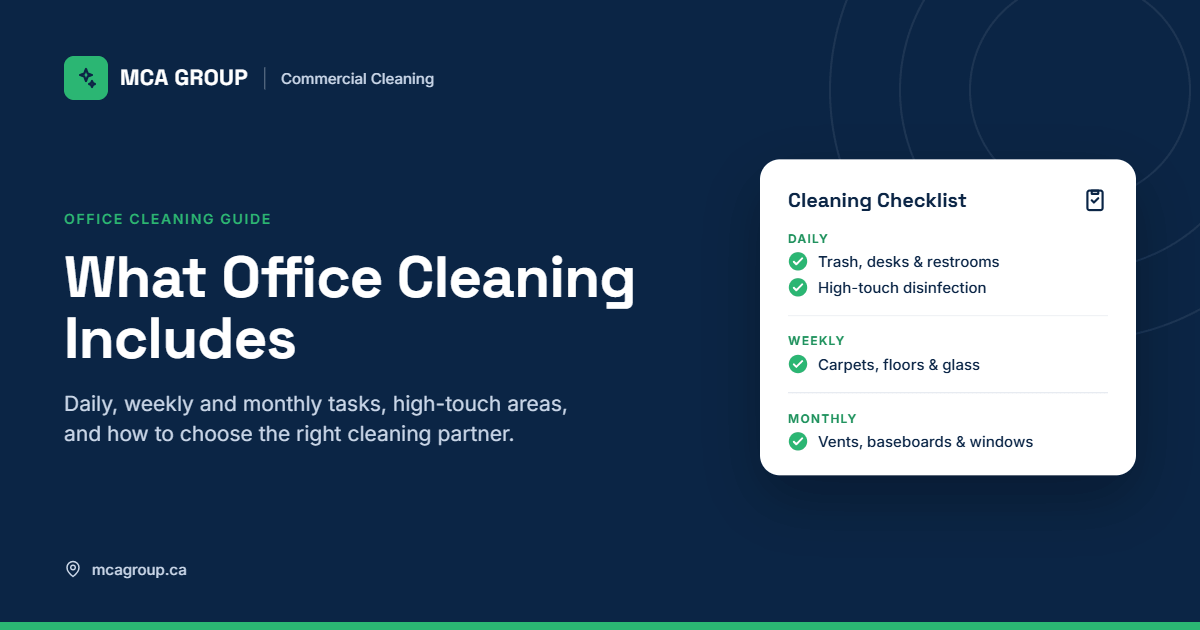
A good office cleaning plan splits the work by how often it needs to happen. This keeps busy areas fresh and stops small messes from turning into big ones.
Daily tasks
These cover the spots people use the most.
- Empty trash and recycling bins.
- Wipe desks, reception counters, and meeting tables.
- Clean and disinfect high-touch items like door handles, light switches, and shared phones.
- Vacuum or sweep main walkways and entrances.
- Clean restrooms and restock soap, paper towels, and toilet paper.
- Wipe up kitchen counters, sinks, and tables in the break room.
Weekly tasks
These jobs go a bit deeper.
- Vacuum all carpets and mop hard floors.
- Dust shelves, window sills, and monitors.
- Clean glass doors and partitions.
- Wipe the inside of microwaves and fridges, and toss old food.
- Disinfect shared equipment such as copiers.
Monthly tasks
These are the jobs that are easy to forget.
- Dust vents, baseboards, and light fixtures.
- Clean windows inside.
- Spot-clean walls and chairs.
- Move furniture to vacuum and mop underneath.
- Check supplies and cleaning tools, and replace what is worn out.
Put the list in writing and say who owns each task. Whether your own team or an outside crew does the work, a clear checklist makes it easier to see what was done and what was missed.
Not sure what your office needs? Make a list of your daily, weekly, and monthly tasks today, then compare it with your current routine.
High-Touch Areas That Need Extra Attention
Some spots in your office get touched far more than others. These high-touch areas can pass dirt and germs around quickly, so they need cleaning more often than floors or windows.
Common high-touch areas
- Door handles and push plates
- Light switches
- Elevator buttons
- Shared printers and copiers
- Break room fridge handles, microwaves, and coffee machines
- Faucets, soap dispensers, and restroom stall locks
- Conference room tables, remotes, and phones
- Desks, keyboards, and mice
How to keep them under control
Start with a schedule. In a busy office, wipe the most-used spots every day. Shared items, like the printer screen and break room appliances, may need more than one wipe a day. Less-used spots can be done weekly.
Use the right products. Clean first to remove dirt, then disinfect where needed. Follow the label on the disinfectant, including how long the surface should stay wet. Use products made for electronics on screens and keyboards.
Keep a checklist. A written list shows what was done and what was missed. Give it to a named person or crew so nothing slips.
Busy spaces need a steady plan
This matters even more where many people come and go. MCA Group cleans more than 24 Rogers retail stores in Toronto, and those customer-facing spaces have a lot of foot traffic that needs regular attention. F1 In any busy space, a steady routine works better than an occasional deep clean.
Not sure your current routine covers these spots? Contact MCA Group to talk through a cleaning plan for your workplace.
Specialty Office Cleaning Services: Carpets, Windows, Floors, and Disinfection
Daily cleaning keeps an office tidy. Specialty cleaning handles the jobs that daily work can miss. These tasks need extra tools and time, so most offices schedule them on a regular basis.
Carpets
Carpet traps dust, dirt, and spills. Vacuuming helps, but steam cleaning goes deeper into the fibres. MCA Group includes carpet steam cleaning in its cleaning program for a school in the Greater Toronto Area. F1
Floors
Hard floors wear down with foot traffic and can look dull over time. Stripping removes old layers of finish, and waxing adds a fresh protective coat. MCA Group lists floor maintenance, stripping, and waxing in that same program.
Windows
Clean glass lets in more light and makes a good first impression on visitors. Check inside glass, frames, and entry doors first. Outside or high windows may need special equipment, so ask any provider how they handle them.
Disinfection
Cleaning removes dirt. Disinfecting uses products to kill germs on surfaces. Focus on places many hands touch, such as washrooms, door handles, light switches, and shared kitchens. At the school, MCA Group pairs washroom cleaning with disinfection.
That school case also offers a useful lesson. Busy buildings do not stay fresh with night work alone, so MCA Group adds daytime porter touch-ups to its nightly cleaning. A high-traffic office can use the same thinking.
Your next step: List your carpets, floors, windows, and high-touch spots. Then ask a commercial cleaner for a schedule that covers each one. Contact MCA Group to talk through your space.

Green Cleaning Methods for a Healthier Workplace
Green cleaning means using products and methods that are gentler on people and on the environment. For an office, the goal is simple: get surfaces clean without leaving strong fumes or harsh residue behind.
Here are practical ways to make your routine greener.
Choose safer products
Look for cleaners with third-party eco labels, such as Green Seal or EPA Safer Choice. Read the label and the safety data sheet. Skip products with strong smells if you can. Some people find these irritating, especially in closed rooms.
Use the right tools
Microfiber cloths and mops trap dust and dirt well, and you can wash and reuse them. Vacuums with HEPA filters hold fine dust instead of pushing it back into the air.
Use less, not more
Extra product does not clean better. It can leave a sticky film that attracts more dirt. Measure the amount and follow the directions.
Cut waste
Buy concentrates, refill bottles, and use recycled paper products. Sort trash and recycling in clear, labeled bins.
Focus on high-touch spots
Door handles, desks, shared keyboards, and break room surfaces need regular attention. Green products can handle these jobs, but check that any disinfectant is approved for the germs you want to target and follow the contact time on the label.
Improve airflow
Open windows when you can, and change HVAC filters on schedule.
If you hire a cleaning company, ask what products and equipment they use. Ask if they can follow your green preferences. Put the answers in writing before you sign.
Ready to make the switch? Start with one change this week, like swapping your all-purpose cleaner, and build from there.
In-House Cleaning vs. Professional Commercial Cleaners
Both options can work. The right choice depends on your size, your budget, and how much time you want to spend managing cleaning.
In-house cleaning
With an in-house team, you hire your own cleaners. You control the schedule and the tasks. This can suit a small office with simple needs. But you also handle hiring, training, supplies, equipment, and cover for sick days. If one person is out, the work may slip.
Professional commercial cleaners
A commercial cleaning company brings trained staff, tools, and a set process. You do not have to buy equipment or find backup staff. This often helps most when your space is large, busy, or spread across several sites.
Multiple sites are where one provider can make life easier. MCA Group, for example, cleans more than 24 Rogers retail stores in Toronto, and each store has its own layout and traffic level. Rogers works with one main contact instead of juggling several cleaning vendors. The work covers customer areas, floors, washrooms, and staff spaces.
How to choose
Ask yourself these questions:
- How many locations do you have?
- Do you have time to manage staff and supplies?
- Do you need the same standard at every site?
- Can your team cover absences?
If you need steady results across locations, or you lack the time to manage a team, a professional provider is likely the better fit. A small, single office with a free person to run things may do fine in-house.
Ready to compare? Contact MCA Group to talk through your space and build a cleaning plan that fits.
How to Choose an Office Cleaning Company and Get Started
Picking a cleaning company is easier when you start with your own needs. Write down what you want cleaned, how often, and when your team is out of the space. A small office with a few desks needs a different plan than a large facility with many floors.
What to look for
- Clear scope. The company should list each task in writing, such as trash removal, restroom care, floors, and shared areas like the kitchen.
- Right experience. Ask if they have cleaned spaces like yours. Offices, medical sites, and active job sites all have different needs.
- Proper equipment and trained staff. Ask what tools they bring and how they train their people.
- Simple communication. You should know who to call when something is missed.
- Fair pricing. Get the same details from each company so you can compare quotes side by side.
How to get started
- Walk the space with the company. Point out busy areas, sensitive items, and any problem spots.
- Ask for a written quote and a sample schedule.
- Start with a short trial if you can. Check the results after a few weeks.
- Share feedback early, and adjust the plan as your needs change.
A good cleaning partner should make your life easier, not add more work. If you are ready to compare options, contact a commercial cleaning team today, share your checklist, and ask for a free walkthrough and quote.


