

Introduction
A clean workplace isn’t just about appearance it directly impacts employee productivity, health, and client perception. A well-structured office cleaning schedule ensures that no area is overlooked and that cleaning tasks are performed consistently and efficiently.
Without a plan, dirt, clutter, and germs can quickly accumulate especially in high-traffic areas like meeting rooms, kitchens, and restrooms.
This step-by-step guide will help you create a practical, scalable, and SEO-optimized office cleaning schedule tailored to your workspace.
Why an Office Cleaning Schedule Matters
An organized office cleaning schedule is essential for:
- Maintaining hygiene and reducing illness
- Boosting employee morale and productivity
- Creating a professional impression for clients
- Preventing long-term damage to office assets
Regular cleaning reduces germs and helps minimize sick days, contributing to a healthier workplace.
Step 1: Assess Your Office Needs
Before creating your schedule, evaluate:
- Office size and layout
- Number of employees
- Foot traffic and visitor frequency
- Type of business operations
For example, high-traffic offices require more frequent cleaning, especially in shared spaces.
Step 2: Identify High-Priority Areas
Focus on areas that need frequent attention:
- Reception and lobby
- Workstations and desks
- Conference rooms
- Kitchens and break rooms
- Restrooms
- Hallways and common areas
These zones accumulate dirt and germs faster, making them critical in your office cleaning schedule.
Step 3: Divide Tasks by Frequency
A successful office cleaning schedule is structured into daily, weekly, and monthly tasks.
Daily Cleaning Tasks
Daily cleaning keeps your office consistently tidy and hygienic.
- Empty trash and recycling bins
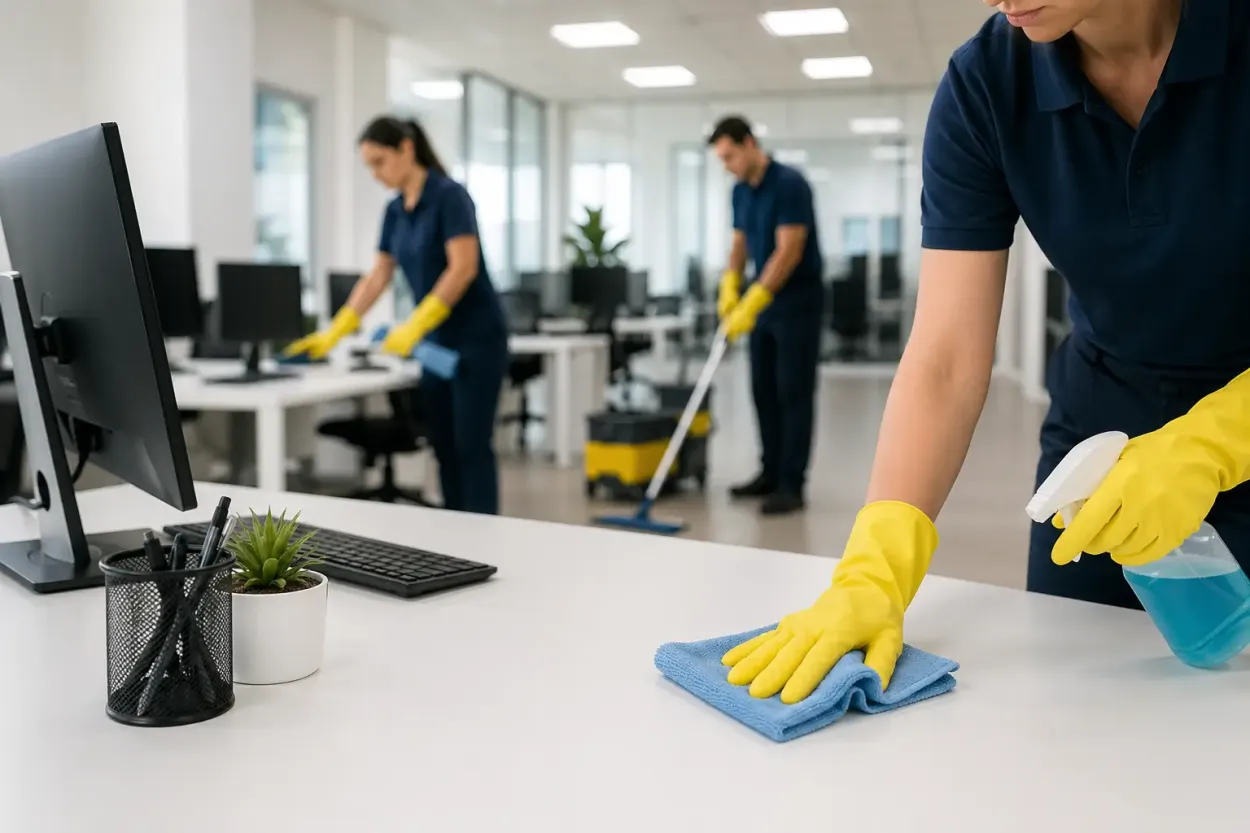
- Wipe desks and shared surfaces
- Clean kitchen counters and sinks
- Sanitize restrooms
- Sweep and mop floors
- Disinfect high-touch areas (door handles, switches)
Daily cleaning prevents buildup and keeps germs under control.
Weekly Cleaning Tasks
Weekly tasks focus on deeper cleaning and maintenance.
- Vacuum carpets thoroughly
- Dust furniture and equipment
- Clean meeting rooms
- Disinfect office electronics
- Wipe appliances and fixtures
High-touch surfaces should be disinfected regularly to prevent the spread of bacteria.
Monthly Cleaning Tasks
Monthly cleaning ensures long-term cleanliness and upkeep.
- Wash windows and blinds
- Deep clean carpets and upholstery
- Clean behind furniture and equipment
- Sanitize storage areas
- Polish floors and surfaces
Deep cleaning helps maintain office aesthetics and extends the lifespan of assets.

Step 4: Assign Responsibilities
Decide who will handle each task:
- In-house employees (for light daily tasks)
- Professional cleaning services (for deep cleaning)
Clear delegation avoids confusion and ensures accountability.
Step 5: Create a Cleaning Checklist Template
Turn your schedule into a checklist:
- Frequency
- Tasks
- Assigned To Daily
- Trash removal, surface cleaning
- Staff Weekly
- Vacuuming, dusting
- Cleaning team Monthly
- Deep cleaning
- Professionals
A checklist ensures consistency and helps track completed tasks.
Step 6: Use the Right Cleaning Supplies
Equip your team with:
- Microfiber cloths
- Disinfectant sprays
- Glass cleaners
- Vacuum cleaners
- Mop and floor cleaners
Using proper tools improves efficiency and cleaning quality.
Step 7: Monitor and Improve Your Schedule
Your office cleaning schedule should evolve over time:
- Review effectiveness regularly
- Adjust based on office usage
- Increase frequency for high-traffic areas
A flexible approach ensures long-term success.
Pro Tips for an Effective Office Cleaning Schedule
- Encourage employees to maintain their own workspaces
- Keep cleaning supplies accessible
- Schedule cleaning during off-hours to minimize disruption
- Consider hiring professionals for consistent results
Conclusion
Creating an effective office cleaning schedule doesn’t have to be complicated. By assessing your needs, organizing tasks by frequency, and assigning responsibilities, you can maintain a clean, healthy, and productive workspace.
According to workplace cleaning and disinfecting guidelines, regular cleaning of high-touch surfaces plays a critical role in preventing the spread of germs in office environments.
If you’re looking for expert cleaning solutions, consider professional services like MCA Group to ensure your office meets the highest hygiene standards.
FAQs
How often should an office be cleaned?
Daily cleaning is recommended for high-traffic areas, with weekly and monthly deep cleaning tasks for maintenance.
What is included in an office cleaning schedule?
It typically includes daily, weekly, and monthly tasks covering all office areas such as desks, restrooms, kitchens, and floors.
Should I hire professional cleaners?
Yes, professional cleaners ensure thorough cleaning and help maintain consistent standards, especially for larger offices.


