
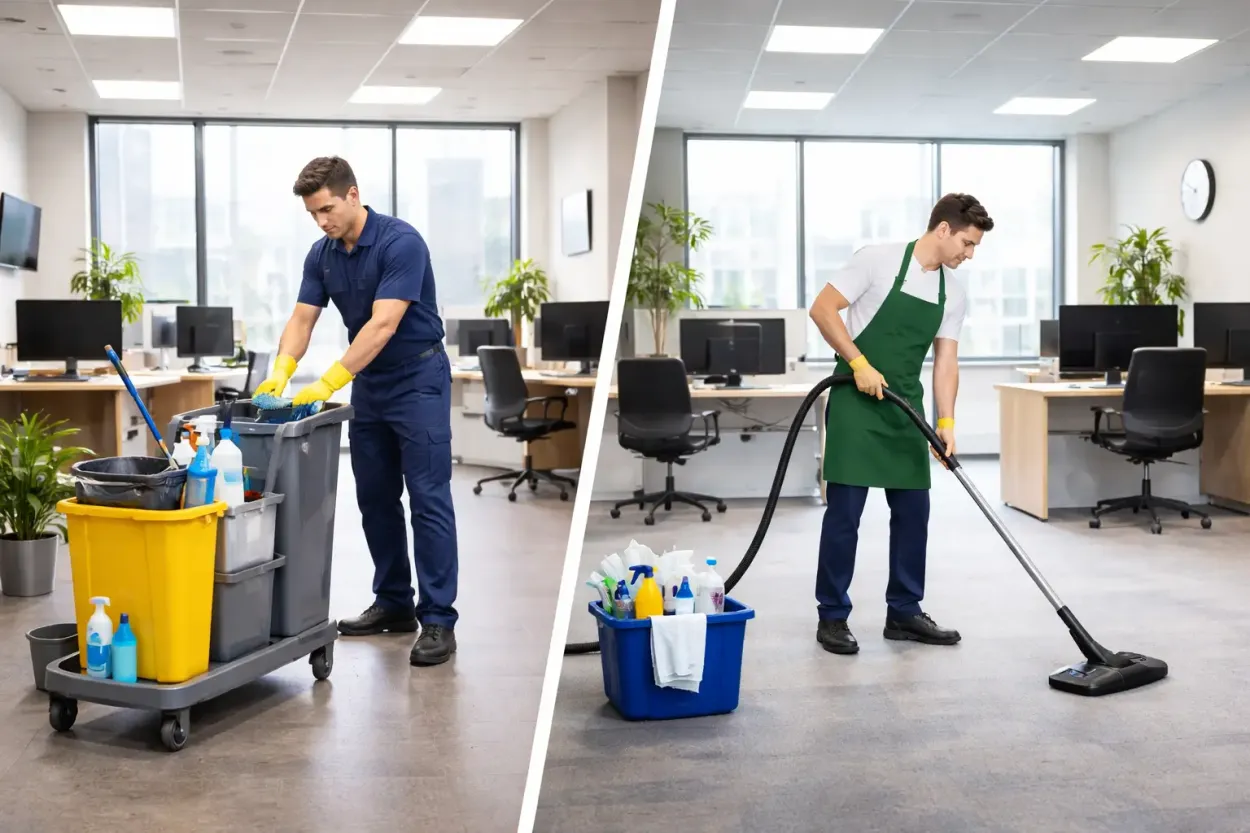
A clean office does more than improve appearance. It protects employee health, supports productivity, and creates a professional impression for visitors and clients. However, many businesses struggle to decide whether Daily vs Weekly Office Cleaning is the better option for their workplace.
The right cleaning schedule depends on several factors, including office size, employee count, industry standards, and the frequency of visitor traffic. Some workplaces require daily sanitation to maintain hygiene, while others can maintain cleanliness with a weekly cleaning plan.
Understanding the differences between Daily vs Weekly Office Cleaning helps businesses choose the most effective solution for their workplace.
Why Office Cleaning Frequency Matters
Workspaces collect dust, bacteria, and clutter quickly. High touch surfaces such as desks, door handles, keyboards, and shared equipment can become sources of germs if they are not cleaned regularly.
Proper cleaning frequency helps businesses:
- Reduce workplace illness
- Maintain professional standards
- Improve employee morale
- Extend the lifespan of office furniture and flooring
- Create a welcoming environment for clients
The challenge for many companies is balancing cleanliness with operational costs.
What Is Daily Office Cleaning?
Daily office cleaning involves routine cleaning tasks performed every business day. This schedule is common in busy offices, healthcare environments, corporate headquarters, and customer facing workplaces.
Daily cleaning focuses on maintaining hygiene and preventing the buildup of dirt or germs.
Typical Daily Cleaning Tasks
Daily office cleaning usually includes:
- Emptying trash bins and replacing liners
- Sanitizing high touch surfaces
- Cleaning restrooms and restocking supplies
- Vacuuming carpets and mopping floors
- Cleaning reception areas
- Wiping desks and shared equipment
- Disinfecting door handles and light switches
These tasks ensure the office stays clean throughout the workweek.
Benefits of Daily Office Cleaning
Daily cleaning provides the highest level of workplace hygiene and organization.
Improved Employee Health
Offices can easily become breeding grounds for bacteria. Regular sanitization of surfaces helps reduce the spread of viruses and germs.
Fewer illnesses mean fewer sick days and better productivity.
Professional Workplace Appearance
For businesses that host clients regularly, appearance matters. Daily cleaning keeps the workspace organized and welcoming.
Reception areas, meeting rooms, and common areas remain presentable at all times.
Better Workplace Productivity
Employees perform better in clean and organized environments. Clutter and dirt can create distractions that reduce efficiency.
A well maintained workspace supports focus and morale.
What Is Weekly Office Cleaning?
Weekly office cleaning involves a more thorough cleaning process performed once or twice per week instead of every day.
This cleaning schedule is often suitable for smaller offices or workplaces with fewer employees.
Weekly cleaning focuses on maintaining overall cleanliness rather than daily maintenance.
Typical Weekly Cleaning Tasks
Weekly cleaning typically includes:
- Vacuuming carpets and cleaning floors
- Dusting desks, shelves, and equipment
- Cleaning windows and glass surfaces
- Sanitizing restrooms
- Disinfecting shared areas
- Cleaning break rooms and kitchen spaces
- Removing accumulated trash
Weekly cleaning often includes deeper cleaning tasks that may not be necessary every day.
Benefits of Weekly Office Cleaning
Weekly cleaning can still maintain a clean office environment while reducing operational costs.
Cost-Effective Maintenance
For small offices with limited foot traffic, daily cleaning may not be necessary. Weekly services help maintain hygiene without unnecessary expenses.
Less Disruption to Workflow
Some offices prefer minimal interference with their work environment. Weekly cleaning reduces the number of times cleaning crews enter the workplace.
Adequate for Low Traffic Offices
Businesses with fewer employees or remote teams often generate less daily mess. Weekly cleaning is usually enough to maintain order and hygiene.
Factors That Determine the Right Cleaning Schedule
Choosing between Daily vs Weekly Office Cleaning depends on the unique needs of your business.
Several factors should be considered.
Office Size
Large offices with many employees generate more waste and require frequent cleaning. Smaller offices may not need daily service.
Employee Count
The more employees working in a space, the faster dirt, clutter, and germs accumulate.
High employee density often requires daily cleaning.
Industry Requirements
Some industries have strict hygiene standards.
Examples include:
- Healthcare clinics
- Medical offices
- Food service businesses
- Fitness centers
These environments usually require daily cleaning and sanitization.
Client and Visitor Traffic
Businesses that host clients regularly should maintain a consistently clean appearance. Reception areas, meeting rooms, and restrooms must remain spotless.
Daily cleaning helps maintain a professional environment.
Shared Spaces
Offices with shared kitchens, conference rooms, and collaborative workspaces experience more daily use. These areas require frequent sanitation.

When Daily Cleaning Is the Best Choice
Daily office cleaning is recommended for:
- Corporate offices with large teams
- Healthcare facilities
- Retail offices
- Customer facing businesses
- High traffic workspaces
- Offices with shared workstations
These environments require consistent sanitation to maintain safety and professionalism.
When Weekly Cleaning Works Well
Weekly cleaning is suitable for:
- Small businesses
- Offices with fewer employees
- Remote work environments
- Low traffic workplaces
- Professional offices with minimal client visits
These workplaces can maintain cleanliness without daily service.
Hybrid Cleaning Schedules
Many businesses choose a hybrid cleaning schedule that combines daily maintenance with deeper weekly cleaning.
For example:
Daily tasks may include:
- Trash removal
- Restroom cleaning
- Surface sanitation
Weekly tasks may include:
- Deep carpet cleaning
- Window cleaning
- Detailed dusting
- Floor polishing
This balanced approach provides both cleanliness and cost efficiency.
The Role of Professional Office Cleaning Services
Professional cleaning services help businesses maintain consistent hygiene standards without overburdening employees.
Experienced cleaning teams provide:
- Trained cleaning professionals
- Commercial-grade equipment
- Safe disinfectants
- Customized cleaning schedules
- Quality control inspections
Outsourcing cleaning services allows businesses to focus on their core operations while maintaining a healthy workspace.
Creating a Healthier Workplace Environment
A clean office environment supports employee wellbeing, workplace productivity, and positive business impressions.
Choosing the right cleaning schedule ensures that your workspace remains organized, sanitary, and welcoming.
Daily cleaning provides the highest level of sanitation for busy offices, while weekly cleaning offers an efficient solution for smaller workplaces.
Many companies benefit from a customized cleaning plan that balances routine maintenance with periodic deep cleaning.
Conclusion
Deciding between Daily vs Weekly Office Cleaning depends on the size of your workplace, the number of employees, and the level of foot traffic your business experiences.
Daily cleaning helps maintain consistent hygiene in busy environments, while weekly cleaning works well for smaller offices with lower activity levels.
A customized cleaning schedule often provides the best results by combining routine maintenance with deeper cleaning services.
Investing in professional office cleaning ensures your workplace stays healthy, organized, and ready to make a positive impression every day.


