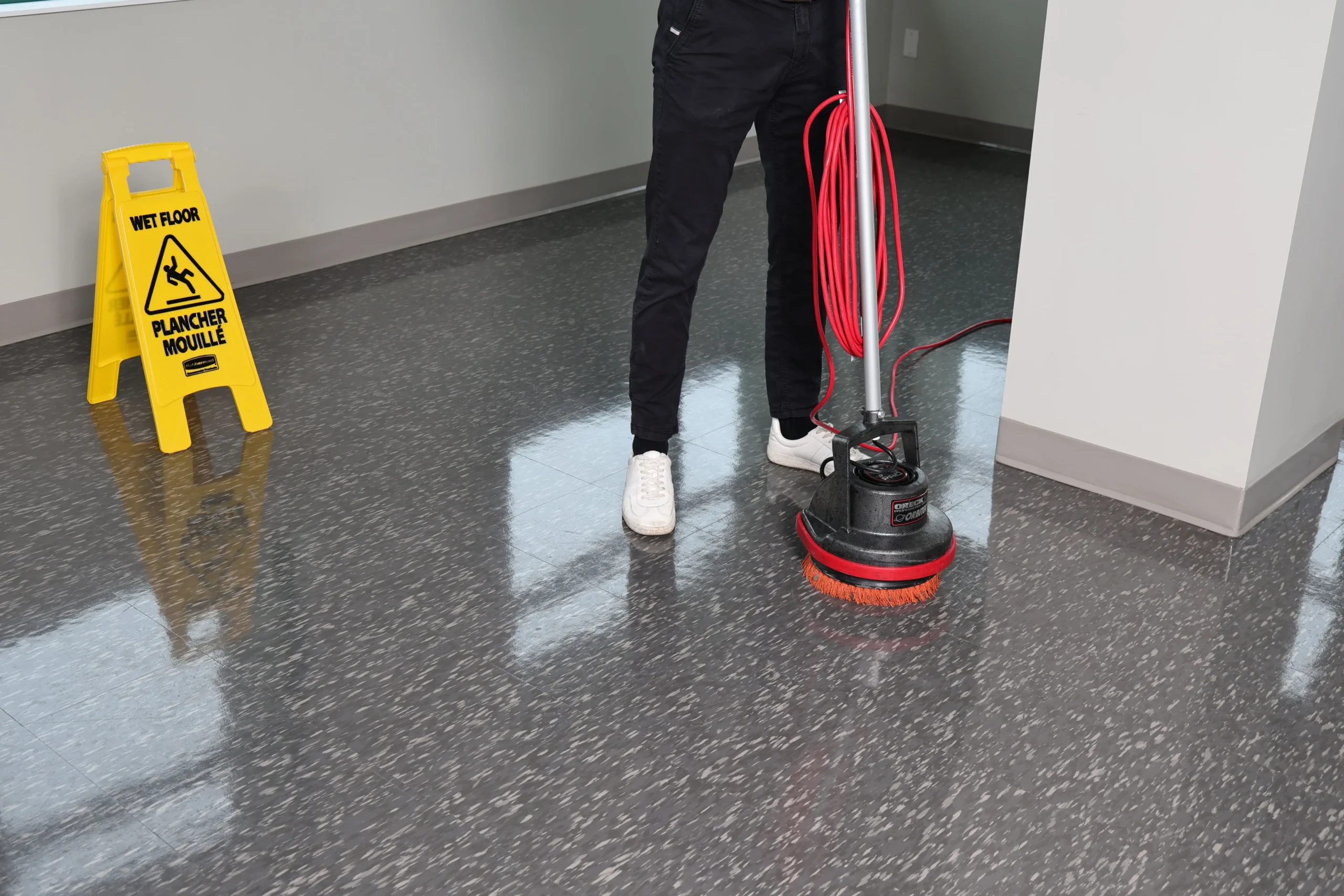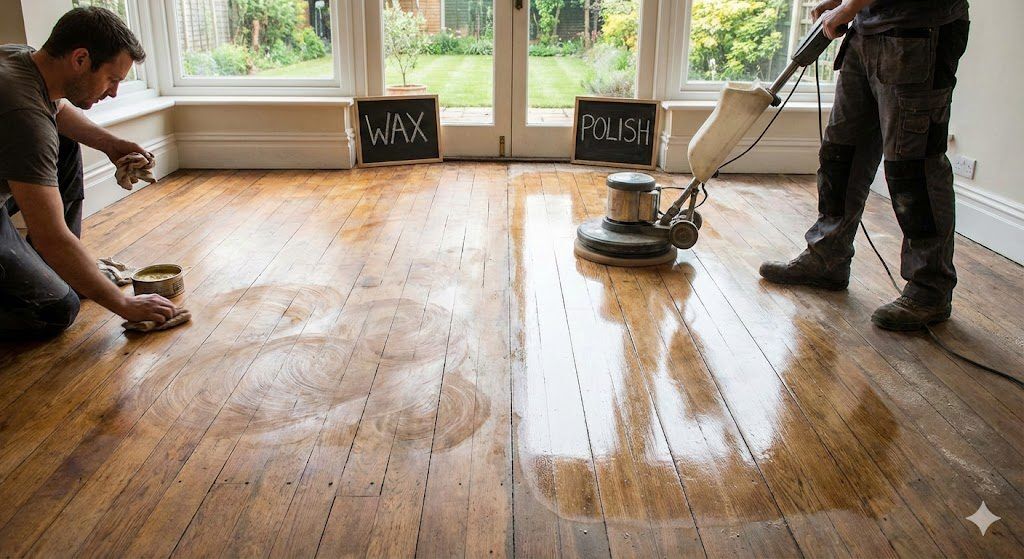
Keeping your commercial floors clean, glossy, and professional isn’t just about appearance — it’s about protecting your investment and creating a welcoming environment for clients and employees. Two of the most common maintenance methods are floor waxing and floor polishing. While the terms are often used interchangeably, each process serves a distinct purpose depending on your flooring type, foot traffic, and long-term maintenance goals.
In this guide, we’ll break down the differences between floor waxing and polishing, when to use each, and how to decide which one your business truly needs.
What Is Floor Waxing?
Floor waxing involves applying a protective layer — typically an acrylic-based wax — over certain types of hard flooring such as vinyl composition tile (VCT), linoleum, or hardwood. This wax coating serves as a barrier against scuffs, stains, and moisture, while providing a high-gloss finish that enhances the aesthetic of your floor.
Over time, this wax layer wears down due to daily traffic, spills, and cleaning. That’s why regular stripping and re-waxing is part of an ongoing maintenance plan. In commercial environments like hospitals, schools, or retail stores, waxing can significantly extend the lifespan of your floors while maintaining a polished, professional look.
Key Benefits of Floor Waxing
- Durability: Protects flooring from scratches and abrasions.
- Moisture Resistance: Helps prevent water damage and staining.
- Enhanced Appearance: Creates a glossy, reflective finish that boosts visual appeal.
- Easier Cleaning: The smooth surface allows dust and debris to be removed more efficiently.
Best Flooring Types for Waxing
- Vinyl and VCT
- Linoleum
- Hardwood (with specialized waxes)
- Asphalt tile
Waxing is ideal for spaces where protection is as important as shine — especially high-traffic commercial settings that experience frequent wear and tear.
What Is Floor Polishing?
Floor polishing, on the other hand, is the process of using a high-speed floor buffer or burnisher to smooth and restore the floor’s surface. Instead of adding a new coating, polishing works by refining the existing surface layer, often removing micro-scratches and dullness.
Polishing can be performed on various flooring materials, including marble, concrete, terrazzo, and tile, to achieve a glossy, mirror-like finish. It’s a chemical-free and eco-friendly process that rejuvenates floors without the need for additional coatings.
Polished Concrete Can maintain its shine for 5–10 years with only periodic burnishing and cleaning, according to the National Terrazzo and Mosaic Association (NTMA).
Highly polished stone or concrete can become slippery when wet, but applying anti-slip conditioners or micro-etching treatments can maintain safe COF levels above 0.42, as recommended by the American National Standards Institute (ANSI A137.1).
What are the Benefits of Floor Polishing
- Natural Shine: Enhances the existing surface without wax buildup.
- Low Maintenance: Reduces the need for stripping or recoating.
- Eco-Friendly: No chemical waxes or strippers required.
- Long-Term Savings: Extends the life of stone and concrete floors through surface densification.
Best Flooring Types for Polishing
- Concrete
- Marble
- Terrazzo
- Granite
- Natural stone
If your business has decorative concrete or stone flooring, polishing offers a sleek, modern finish that requires minimal maintenance compared to traditional waxing.
What is the difference between floor waxing and polishing?
| Feature | Floor Waxing | Floor Polishing |
| Process | Adds a protective wax coating | Smooths and buffs existing surface |
| Purpose | Protection and shine | Restoration and enhancement |
| Maintenance Frequency | Requires periodic stripping and reapplication | Needs periodic buffing only |
| Best for | Vinyl, VCT, hardwood | Concrete, marble, terrazzo |
| Cost Over Time | Moderate – recurring wax reapplication | Lower long-term cost with polishing |
| Finish Type | High-gloss, layered shine | Reflective, natural gloss |
Ultimately, floor waxing focuses on protection and maintenance, while floor polishing focuses on refinement and restoration.
When to choose floor waxing and polishing?
1. Consider Your Floor Type
The most important factor is your flooring material. Vinyl, linoleum, and hardwood floors need waxing for optimal protection. Meanwhile, stone or concrete floors benefit more from polishing, which brings out their natural luster.
2. Evaluate Foot Traffic
High-traffic areas like corridors, lobbies, or retail stores may require waxing to create a resilient barrier. Conversely, office spaces or showrooms with decorative floors may only need periodic polishing to maintain a clean, glossy surface.
3. Think About Long-Term Maintenance
Waxed floors require regular stripping and recoating — typically every 6 to 12 months — to maintain their finish. Polished floors need less upkeep, but occasional re-polishing may be required to maintain reflectivity.
4. Aesthetic Preference
Waxing creates a warm, rich glow — ideal for traditional interiors. Polishing offers a sleek, modern shine — perfect for contemporary spaces.
5. Budget and Sustainability
While waxing involves recurring costs due to reapplication, polishing has a higher upfront cost but lower long-term maintenance. Additionally, polishing is more environmentally sustainable, as it eliminates the need for harsh stripping chemicals.
The Science Behind Shine: How Modern Techniques Improve Results
Modern floor maintenance goes beyond appearance — it’s also about surface integrity and performance. Innovations like diamond polishing pads, burnishing machines, and nanosealants allow businesses to achieve long-lasting shine with less chemical use.
Common Misconceptions about floor polishing and waxing
- “Polishing and buffing are the same.”
Buffing uses lower speeds and is meant for light cleaning, while polishing uses high-speed burnishers for deep restoration. - “You can wax over polished concrete.”
This is unnecessary and counterproductive — wax prevents concrete from breathing and can cause discoloration. - “Waxing is outdated.”
Not at all. In many commercial settings, especially schools and hospitals, waxing remains the most effective way to protect floor surfaces.
How do Professionals Combine waxing and polishing for cleaning floors?
In some cases, a hybrid approach can deliver the best results. For example, a facility might polish concrete lobby floors for a high-end aesthetic while waxing vinyl hallways for protection and durability. The right commercial cleaning provider will evaluate your floors, traffic flow, and environment to tailor a maintenance plan that maximizes both appearance and longevity.
Why Choosing the Right Method Matters
The right floor maintenance method can:
- Extend the life of your flooring investment.
- Reduce long-term maintenance costs.
- Improve safety by preventing slips or surface degradation.
- Elevate your brand image through consistently clean, professional spaces.
Regular waxing or polishing also reflects your company’s commitment to quality and cleanliness — a critical factor in environments like retail, hospitality, and healthcare, where first impressions count.
Final Thoughts: Shine with Strategy
Both floor waxing and polishing can transform the look and feel of your business. The right choice depends on your flooring type, traffic volume, maintenance capacity, and desired aesthetic.
If your goal is surface protection and durability, waxing is your go-to solution. If you want natural brilliance and minimal upkeep, polishing is the way forward.
Whichever path you choose, ensure it’s part of a consistent floor care strategy — one that’s not just about cleaning, but about preserving the integrity, safety, and beauty of your business environment.