Healthcare facilities require a far higher level of sanitation than standard commercial spaces. Medical clinics, dental offices, diagnostic centers, and outpatient facilities must follow strict Cleaning Standards to protect patients, staff, and visitors, prevent healthcare-associated infections, and comply with regulatory requirements. At MCA Group, we help healthcare providers implement these rigorous Cleaning Standards, ensuring a hygienic, safe, and compliant environment across every facility.
In Ontario and other jurisdictions in Canada, Infection Prevention and Control (IPAC) standards play a central role in defining how facilities must clean, disinfect, and manage infection risks. These standards, developed by Public Health Ontario and related health bodies, integrate evidence‑based practices for environmental cleaning, disinfection, sterilization, and risk reduction.
Why Cleaning Standards Are Critical in Healthcare Settings
Medical environments host vulnerable populations, infectious agents, and sensitive equipment. Substandard sanitation can lead to healthcare‑associated infections (HAIs), regulatory violations, and loss of patient trust.
Healthcare cleaning standards support facilities by:
- Preventing the transmission of bacteria, viruses, and fungi
- Protecting patients with compromised immune systems
- Supporting regulatory compliance (e.g., IPAC, Occupational Health and Safety Acts)
- Reducing legal and liability risks
- Boosting patient confidence and satisfaction
- Providing a safer, more productive workplace for healthcare staff
Healthcare cleaning is not cosmetic, it is foundational to infection prevention and patient safety.
Ontario IPAC Standards (Infection Prevention and Control)
In Ontario, the IPAC framework sets evidence‑based expectations for infection prevention across healthcare settings, including:
➡️ Development and application of current best practices for cleaning, disinfection, and sterilization
➡️ Environmental and equipment cleaning protocols informed by risk and clinical context
➡️ Staff education, training, and competency in IPAC practices
➡️ Policies and procedures that reduce transmission risk
The IPAC definition comprises practices and procedures that, when applied consistently, prevent or reduce transmission of microorganisms to patients, healthcare workers, and visitors.
Key elements include:
- Point of care risk assessment: Determining appropriate cleaning/disinfection based on exposure risk
- Environmental control: Cleaning, disinfecting, and sterilizing the physical facility and equipment
- Equipment reprocessing: Classifying devices as non‑critical, semi‑critical, or critical and following appropriate cleaning/sterilization processes for each category
Read More: https://mcagroup.ca/medical-office-cleaning-requirements-ontario/
Key Areas That Require Targeted Cleaning Protocols
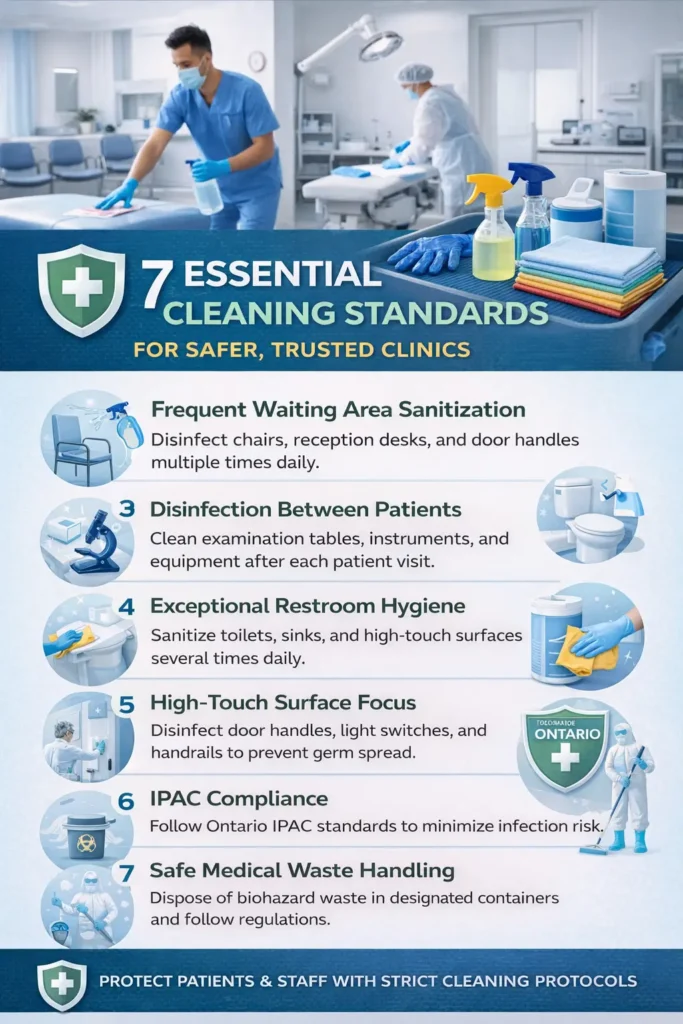
Waiting Areas
High‑traffic and shared spaces need frequent cleaning and disinfection throughout operating hours. Tasks include:
- Disinfection of seating and contact surfaces
- Cleaning reception counters and high‑touch electronics
- Sanitizing door handles, rails, toys or shared items
- Vacuuming/mopping floors with healthcare‑approved disinfectants
In Ontario IPAC practices, high‑touch surface disinfection may be scheduled every 4 hours during busy periods, with additional cleanings when visibly soiled.
Examination Rooms
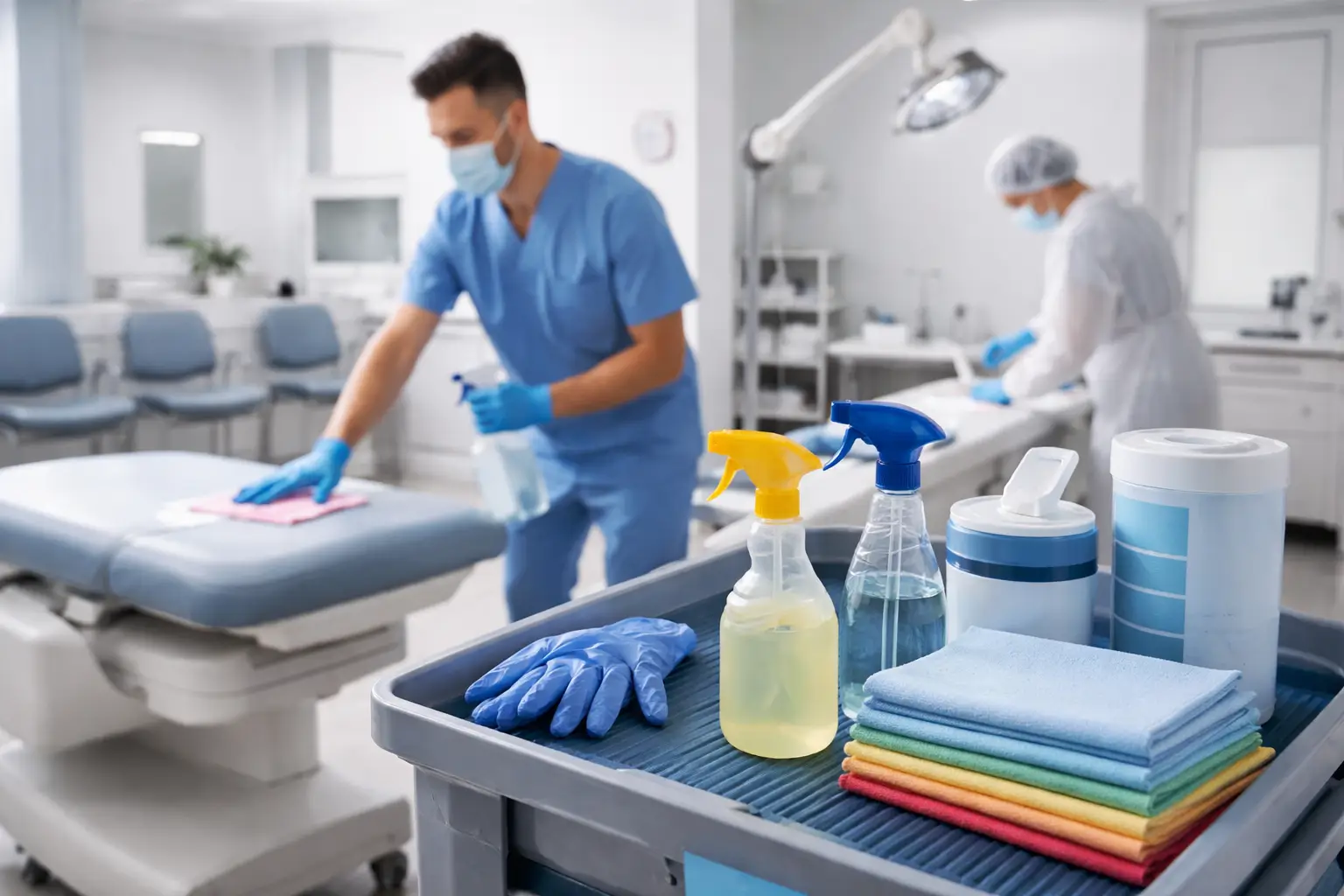
Sensitive clinical spaces require cleaning between every patient:
- Disinfect examination tables and equipment interfaces
- Clean light switches, handles, and cabinets
- Remove and dispose of waste appropriately
- Mop floors with hospital‑grade disinfectants
Strict adherence to cross‑contamination control is mandatory.
Treatment & Procedure Rooms
These zones present higher infection transmission risk and demand:
- Terminal cleaning after each procedure
- Disinfection with Health Canada‑approved agents carrying valid Drug Identification Numbers (DINs)
- Safe disposal of biohazardous waste
- Controlled cleaning of complex equipment
Procedure rooms in Ontario standards may require terminal cleaning protocols, including air exchange considerations after aerosol‑generating procedures.
Restrooms
Restrooms require multiple daily sanitation steps:
- Toilet, sink, mirror, and surface disinfection
- High‑touch surface cleaning (door handles/stalls)
- Floor disinfection
- Hygiene supply restocking
High‑Touch Surfaces: Frequent Disinfection Targets
Surfaces most associated with germ transmission must be disinfected regularly using approved healthcare disinfectants:
- Door handles & push plates
- Light switches
- Reception counters & signage
- Chairs, carts, keyboards, phones
- Handrails
Proper disinfectants with validated contact times are essential; insufficient dwell time reduces effectiveness.
Approved Disinfectant Types
Healthcare facilities use hospital‑grade disinfectants that meet pathogen kill claims, including:
- Bacteria (MRSA, VRE, etc.)
- Viruses (influenza, coronavirus, norovirus)
- Fungi and spores
Common chemistries include:
- Quaternary ammonium compounds
- Hydrogen peroxide solutions
- Bleach (with proper use guidelines)
Only disinfectants approved by regulatory bodies (Health Canada, CDC, etc.) and listed with valid DINs should be used; household products without such approvals are inadequate for clinical cleaning.
Infection Control Protocols in Medical Cleaning
Color‑Coded Cleaning Systems
Different cloths and mops for separate facility zones reduce cross‑contamination:
- Red: High‑risk/contaminated
- Yellow: Clinical/higher‑risk areas
- Green: Low‑risk public spaces
- Blue: Administrative areas
Personal Protective Equipment (PPE)
Cleaning staff must use appropriate PPE consistent with IPAC policies, including:
- Gloves
- Masks
- Protective gowns
- Eye protection
Training ensures correct donning, doffing, and disposal procedures.
Medical Waste Management
Safe medical waste handling is essential:
- Segregate biohazardous waste in designated containers
- Follow provincial or local disposal requirements
- Avoid contact with sharps or contaminated materials
Adherence to regulatory standards (e.g., Ontario Regulation 347) is mandatory.
Cleaning Frequency Standards
Healthcare facilities generally adhere to:
- Daily Cleaning: Waiting areas, restrooms, floors
- Between Patients: Exam tables, equipment, contact surfaces
- Weekly: Walls, vents, baseboards, upholstery
- Monthly: Deep cleaning, HVAC vent cleaning, carpet extraction
Ontario IPAC guidance emphasizes documented cleaning schedules and HVAC/infection control monitoring.
Staff Training & Quality Assurance
Staff must understand:
- Disinfectant use and contact/dwell time
- Cross‑contamination risk mitigation
- PPE usage and infection control
- Safe equipment reprocessing procedures
Regular audits and quality control ensure protocols remain effective.
Role of Professional Medical Cleaning Services
Many facilities partner with cleaning professionals trained in medical environment sanitation:
- IPAC‑aligned protocols
- Regulatory compliance expertise
- Healthcare‑grade disinfectants
- Documented cleaning logs and inspection readiness
Conclusion
Healthcare cleaning standards — especially under frameworks like Ontario’s IPAC standards — prioritize infection prevention, safety, and compliance. From routine high‑touch disinfection to advanced reprocessing protocols, every cleaning activity contributes to a safe healthcare environment. Proper training, hospital‑grade products, and strict adherence to IPAC practices ensure that patients and staff operate in spaces aligned with best infection control practices.