Drywall installation and sanding are essential parts of most construction and renovation projects. However, one of the biggest post-project challenges is Drywall Dust Cleanup, as fine dust spreads easily and settles across every surface.
This fine dust spreads easily through the air and settles on nearly every surface, floors, furniture, vents, and even inside electronics. If not cleaned properly, it can continue circulating for weeks.
Whether you’re handling a home renovation or a large commercial project, knowing the right cleanup approach is critical. Professional teams like MCA Group specialize in post-construction cleaning, ensuring spaces are restored quickly and safely.
In this guide, you’ll learn:
- Why drywall dust is difficult to clean
- The safest way to drywall dust cleanup
- Step-by-step cleaning instructions
- Professional post-construction cleaning insights
Why Drywall Dust Is So Difficult to Remove
Drywall dust is extremely fine and lightweight, made from gypsum, silica, and joint compound additives.
Because of its microscopic size, it can:
- Spread through HVAC systems
- Settle on walls, ceilings, and hidden surfaces
- Become airborne again with minimal movement
- Reappear even after initial cleaning
This is why professionals like MCA Group follow multi-stage cleaning processes rather than a single pass.
Is Drywall Dust Dangerous?
While common in construction, drywall dust can irritate the body when exposure is high.
Possible effects include:
- Throat irritation
- Eye irritation
- Breathing discomfort
- Skin dryness
Always use protective gear:
- Dust mask or respirator
- Safety glasses
- Gloves
Proper cleanup reduces health risks and improves indoor air quality significantly.
Step-by-Step Guide: How Drywall Dust Cleanup Works
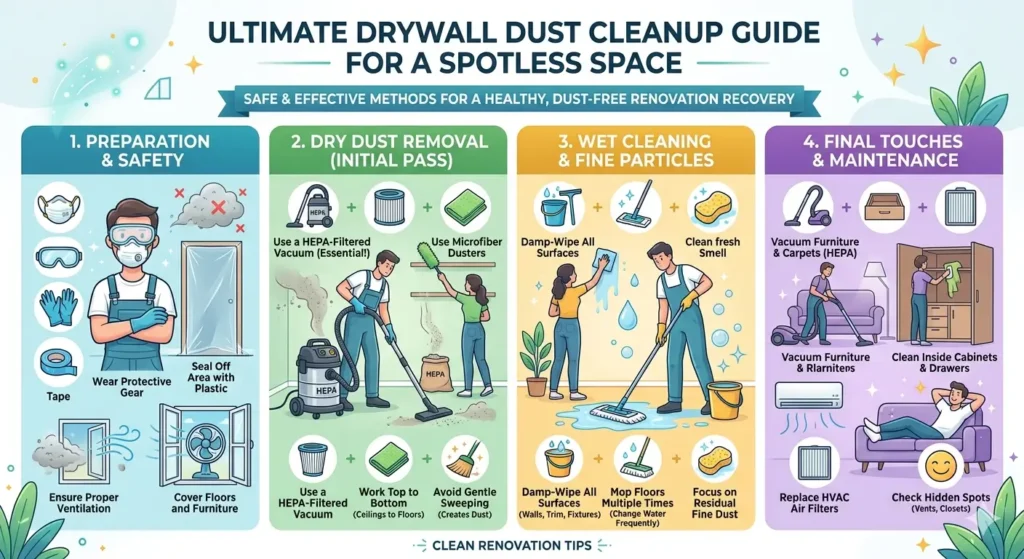
Drywall Dust Cleanup requires a systematic, top-to-bottom approach. Doing it incorrectly can spread the dust further.
Step 1: Improve Ventilation and Air Filtration
Before cleaning:
- Open windows if possible
- Turn off HVAC systems
- Use HEPA air purifiers to trap airborne particles
This step is critical and often prioritized by experts like MCA Group during initial site preparation.
Step 2: Remove Large Debris
Clear out construction leftovers first:
- Drywall scraps
- Packaging materials
- General construction waste
This makes detailed cleaning more efficient.
Step 3: Vacuum Using a HEPA Filter
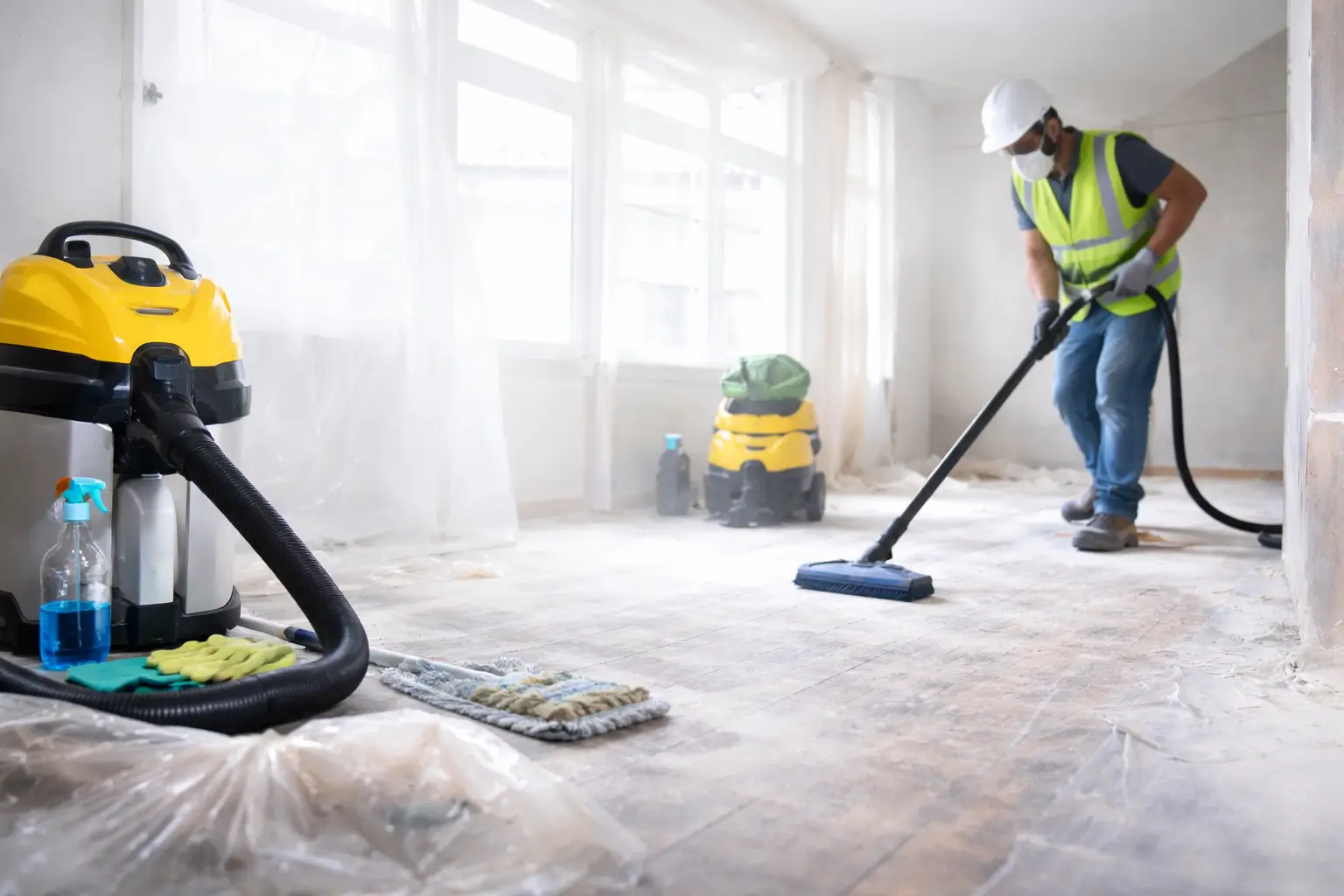
A HEPA vacuum is essential for drywall dust.
Focus on:
- Floors and baseboards
- Window sills
- Shelving and countertops
- Air vents
- Carpets and rugs
Standard vacuums often recirculate dust, which is why professional services like MCA Group rely on industrial-grade HEPA systems.
Step 4: Wipe Surfaces With Damp Microfiber Cloths
After vacuuming:
- Use slightly damp microfiber cloths
- Rinse frequently
- Clean from top to bottom
Surfaces to clean:
- Walls
- Doors
- Trim and moldings
- Light fixtures
- Furniture
Microfiber traps dust instead of spreading it.
Step 5: Mop Floors Thoroughly
Use warm water and a mild cleaning solution.
Important tips:
- Mop multiple times if needed
- Use microfiber mop heads
- Expect a chalky residue on first pass
This step ensures fine dust particles are fully removed.
Step 6: Clean Air Vents and Replace Filters
Dust often hides in HVAC systems.
Be sure to:
- Remove and wipe vent covers
- Vacuum inside vents
- Replace HVAC filters
Professional cleaners like MCA Group emphasize this step to prevent dust recirculation.
Best Tools for Drywall Dust Cleanup
Using the right equipment makes a major difference.
Recommended tools:
- HEPA filter vacuums
- Microfiber cloths and mops
- Air purifiers or scrubbers
- Dust extractors
- Protective respirators
These tools are standard in professional cleaning operations like MCA Group, ensuring faster and more effective results.
Why Drywall Dust Keeps Coming Back
If dust reappears after cleaning, it’s usually because:
- Vents weren’t cleaned
- Surfaces were wiped before vacuuming
- Ceilings were skipped
- Airflow redistributed dust
This is why structured, top-to-bottom cleaning, used by MCA Group, is essential.
When to Hire Professional Cleaning Services
DIY cleaning can work for small areas, but larger projects often require professional help.
Recommended for:
- Office renovations
- Commercial construction
- Retail remodeling
- Large residential projects
Professional teams like MCA Group use industrial equipment and proven systems to eliminate dust efficiently and thoroughly.
What Happens If Drywall Dust Isn’t Removed Properly?
Ignoring drywall dust can lead to long-term issues:
- Poor indoor air quality
- HVAC contamination
- Damage to electronics
- Continuous dust buildup
A proper cleanup ensures your space is safe, clean, and ready for use.
Final Thoughts
Drywall dust cleanup isn’t just about appearance, it’s about health, air quality, and long-term maintenance.
By following a structured cleaning process, vacuuming with HEPA filters, wiping with microfiber, and cleaning ventilation systems, you can effectively remove even the finest dust particles.
For larger or complex projects, partnering with professionals like MCA Group ensures a deeper, faster, and more reliable clean.
We follow industry-approved safety standards and best practices recommended by Canadian authorities such as the Canadian Centre for Occupational Health and Safety (CCOHS) to ensure safe and effective drywall dust cleanup.
FAQ
How long does drywall dust stay in the air?
It can remain airborne for hours and continue settling for days without proper cleaning.
Can you vacuum drywall dust?
Yes, but only with a HEPA filter vacuum for best results.
Does drywall dust damage vacuums?
Yes, standard vacuums can clog or fail. HEPA or industrial vacuums are recommended.
Should you wet drywall dust before cleaning?
Use damp cloths, not excessive water—to avoid creating residue.
How do professionals remove drywall dust?
They use HEPA vacuums, microfiber systems, air filtrat